The Playgen Blog
On prompt-driven playlists, the ceiling of taste-based recommenders, and why the scene in your head deserves a soundtrack Spotify can't give you.
 en
enWe Love Green 2026: The 15th Edition That Doubles as a Generational Handoff
We Love Green turns 15 in 2026 with Gorillaz, The xx, Little Simz, Charlotte de Witte and a lineup that maps the exact moment indie-electronic culture hands the baton.
Read → en
enWacken Open Air 2026: 35 Years in the Holy Land, Four Headliners, and the Savatage Question
The world's biggest pure-metal festival turns 35 with Def Leppard, Judas Priest, Sabaton, Powerwolf, Iron Maiden, Lamb of God, and the most emotionally loaded reunion booking in the festival's history. Your complete guide to W:O:A 2026.
Read → en
enTomorrowland 2026: CONSCIENCIA, 500 Artists, and the World's Biggest Electronic Music Festival
Your deep-dive into Tomorrowland 2026's CONSCIENCIA theme, Calvin Harris's historic debut, confirmed headliners, b2b predictions, Cherry Moon tribute, Dreamville lore, and every stage worth knowing across two weekends in Boom, Belgium.
Read → en
enSolidays 2026: The Charity Festival That Built French Rap
Orelsan, Gims, Major Lazer, Amelie Lens pre-album, Vald × Cauchemar one-off — 50 acts, €80M raised, 28 years of commissioning the uncopyable.
Read → en
enRock en Seine 2026: Five Days, Five Headliners, and the Cure-Sized Closer
Five days, five headliners, and one of the greatest festival closers ever booked: your complete guide to Rock en Seine 2026 at Saint-Cloud.
Read →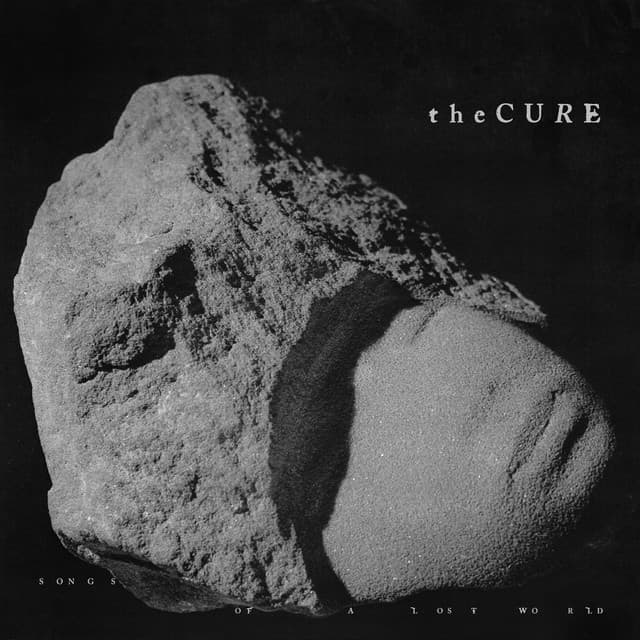 en
enPrimavera Sound 2026: The Reunion Festival at the End of the Mediterranean Night
The Cure, The xx, Gorillaz, Massive Attack, My Bloody Valentine — and a festival that still ends at 5am. Your complete guide to Primavera Sound 2026 at Parc del Fòrum, Barcelona.
Read →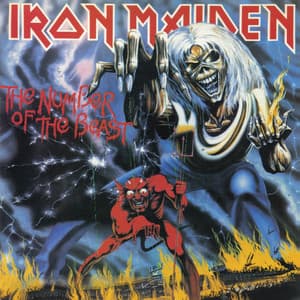 en
enHellfest 2026: Iron Maiden's 50th, The Dillinger Escape Plan Returns, and Four Days of Beautiful Chaos in Clisson
183 bands, six stages, four days, one city that becomes the capital of the world's metal for a weekend: your complete guide to Hellfest 2026 — with full lineup analysis, the Acid Bath and DEP reunion stories, the Warzone tradition, the mud lore, and predictions on who joins whom.
Read → en
enGlastonbury 2026: The Fallow Year, the Lore, and What 2027 Must Be
Glastonbury 2026 is a fallow year — no festival, sacred land recovering. A deep dive into why Worthy Farm goes silent every five years, the full mythology of the Pyramid stage, and who we predict will headline the return in 2027.
Read → en
enDownload Festival 2026: Limp Bizkit, Guns N' Roses, Linkin Park, and the Sacred Mud of Donington
Your complete guide to Download Festival 2026: the history of Donington Park from Monsters of Rock 1980 to now, the full confirmed lineup, and the stories behind every stage.
Read → en
enThe machine that failed and conquered: the Roland TR-808's accidental empire
Roland discontinued the TR-808 in 1983 after selling roughly 12,000 units. Engineers called its synthesized drum sounds fake. Used units hit pawn shops at $50. What happened next rewrote every genre of popular music.
Read →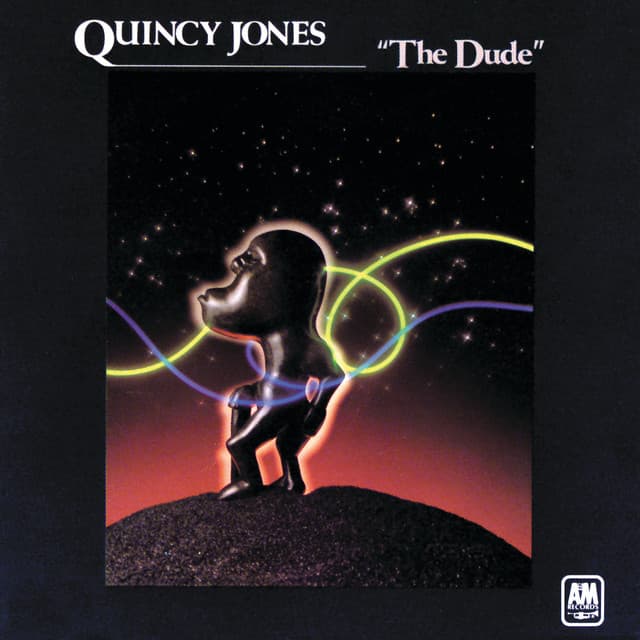 en
enThe invisible decade: Quincy Jones beyond Michael Jackson (1978–1989)
Everyone knows Q produced Off The Wall, Thriller, and Bad. Almost nobody can name the rest. How Quincy Jones built the modern pop production language — one brass stab, one vocal stack, and one 16-hour session at a time — and why the Jackson albums are just the tip of a very deep iceberg.
Read → en
enBefore BTS, there was Hongdae: fifty years of Korean music the world got wrong
K-pop's global dominance has flattened Western understanding of Korean music to idol factories and comeback cycles. But Korea has a 50-year psych-rock, folk, punk, and experimental tradition that pre-dates all of it — and continues to thrive. A field guide to the music that got drowned out.
Read →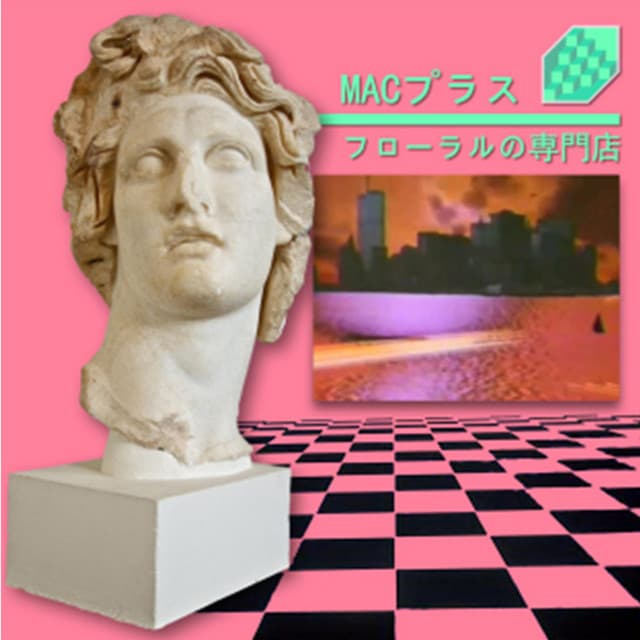 en
enThe 35-year loop: from Moroder to Macintosh Plus, Italo-disco to vaporwave
Giorgio Moroder invented the sequenced bassline in 1977. Italian factories mass-produced a synth-led disco offshoot across the 1980s. The tapes spent two decades as thrift-store dollar finds. Then the internet slowed them down, added Greek statues, and called it vaporwave. A field guide to electronic pop's longest feedback loop.
Read →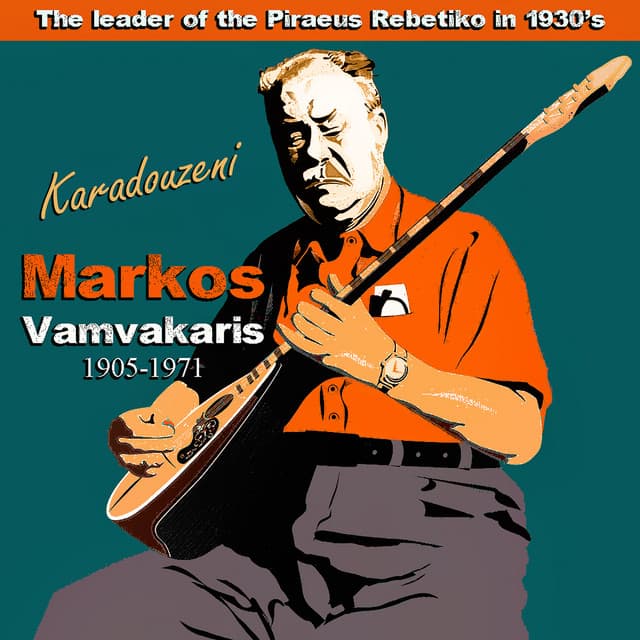 en
enThe Blues of Piraeus: Greek Rebetiko from Smyrna's Ashes to the Modern Revival
In September 1922, Smyrna burned and 1.2 million Greek Orthodox refugees poured into Piraeus. They brought a music with them — café-aman vocal labyrinths, Sephardic harmonics, Armenian microtones — and fused it with the hash dens of the port into rebetiko, the most catastrophically alive genre Greece has ever produced. UNESCO agreed in 2017. The genre itself was already having its fourth comeback.
Read → en
enThe Belgian DAW That Built American Rap: FL Studio's Hip-Hop Revolution
Image-Line's Fruity Loops started as Belgian shareware in 1997. By 2015 it was the default production environment for American trap, drill, and everything downstream — a DAW so deeply embedded in the music that its workflow shapes the sound. Here's how a $99 lifetime license from Ghent conquered the most commercially dominant genre on earth.
Read → en
enCold signal, hot source: Detroit techno's Berlin pipeline (1988–2026)
How a post-industrial sound made in Detroit basements became Berlin's default after the Wall fell — tracing the Belleville Three, Underground Resistance, Tresor, and the colder mutation that runs Berghain today.
Read → en
enCumbia 360: the most successful Latin American music export nobody talks about
Salsa gets the documentaries. Reggaeton gets the billion-stream numbers. Bossa nova gets the New Yorker retrospective. Cumbia, meanwhile, quietly colonised six continents, mutated into a dozen regional strains, and outlived every trend that was supposed to replace it. A field guide to the genre that refuses to stay where it started.
Read → en
enA Language No One Else Speaks: The Cocteau Twins and the Dream Pop Lineage
Elizabeth Fraser invented a vocal language. Robin Guthrie buried it in reverb. Together, from a Scottish town of 35,000 people, they invented dream pop — and defined an aesthetic lineage that runs through 4AD, shoegaze, Sigur Rós' Hopelandic, and forty years of musicians trying to make sound feel like a state of mind.
Read → en
enThe alias machine: how Richard D. James used pseudonyms to break his own brand
Richard D. James released music under at least a dozen names — Aphex Twin, AFX, Polygon Window, Caustic Window, GAK, The Tuss, Power-Pill, and more. The aliases aren't marketing disguises. They're compositional rules: each persona has a formal constraint the others don't follow.
Read → en
enThe four-count man: Pharrell Williams' hidden production discography
The Marvin-Gaye falsetto on Ed Sheeran's 'Sing'. The marching-band stomp on 'Hollaback Girl'. The hook on Kendrick's 'Alright'. A French rap track for Luc Besson's Taxi 3. The reason 'Drop It Like It's Hot' starts with that one-two-three-four. The same producer, hiding in plain sight for thirty years.
Read → en
enSongs of the Far West: where the cowboy soundtrack actually came from
The 'western' sound in your head — that whistle, that twang, that gunfighter ballad — is a hybrid invention. Half of it was sung on cattle trails in the 1870s; half was recorded in a Rome studio in 1966. The two halves never met. A field guide to how a real frontier and an Italian film score fused into a single genre.
Read → en
enSomebody Once Told Me the Internet Would Do This to Songs
A complete field guide to the meme song — from Badger Badger Badger and Numa Numa through Chocolate Rain, Gangnam Style, Harlem Shake, Coffin Dance, and the TikTok audio wars. 50 songs, five YouTube links that all go to exactly the same place.
Read → en
enBeijing underground, Shanghai noise: the Chinese music the rest of the world is just starting to find
A venue run by an American economist incubated China's indie rock generation. A Shanghai label's artists perform at Berghain and Tate Modern. A Beijing producer was handpicked by Aphex Twin. The underground is real, it is specific, and it has been building for twenty years.
Read → en
enChina, 2026: the world's fourth-largest music market and the artists deciding where it goes next
In 2025 China's recorded music revenues grew 20.1% — fastest in the top 20 — pushing it past Germany to #4 globally. The platforms, the superstars, the underground, and the structural ceiling that will determine whether C-pop becomes the next K-pop, or something else entirely.
Read → en
enGhost artists: the AI acts who topped Spotify in 2025
Six AI-generated projects hit Billboard, fooled Spotify's algorithm, and collectively racked up tens of millions of streams in 2025–2026. This is how the ghost artist era began — and what it actually sounds like.
Read → fr
frMontreuil sonne : Bamako-sur-Seine, l'Usine de la rue Kléber et la longue couture musicale du 93 (1984–2026)
Quarante ans de musique à Montreuil : Salif Keita s'installe en 1984, 200 punks attaquent la police rue Kléber en 1986, les Instants Chavirés ouvrent en 1991, La Pêche en 1994, L'uZine en 2007, La Marbrerie en 2014. Cinq scènes superposées qui ne se sont jamais effacées.
Lire → en
enTropicália, 1967–1968: how a fourteen-month movement got its founders arrested
Tropicália lasted barely a year and a half before the Brazilian junta jailed its two architects. A field guide to the records, the cast, the arrests, and the long afterlife — with every song traced.
Read → fr
frFest-noz augmenté : kan ha beatbox, bombarde-electro, bagad cosmique — où en est la musique bretonne en 2026
Trente ans après le rave Astropolis dans un champ du Finistère et le pic d'Ar Re Yaouank, le fest-noz a fusionné avec l'électronique, le rock et le beatbox. De Stivell à Modkozmik × Bagad Cap Caval : cartographie d'une tradition qui se réécrit.
Lire → en
enBristol, 1991–1995: three records, one studio, and a genre named in the wrong city
Massive Attack, Portishead and Tricky put out three landmark albums in fifty months, all from one Bristol crew that came up in the same sound system. The genre name was attached afterward by a London magazine, about a record made in California. A field guide to how this happened.
Read → en
enWhy searching 'trader music' on Spotify gives you slowed-reverb TikTok songs — and what LLMs fix
Spotify playlist search is keyword-matching on user-generated titles. The top 'trader music' playlist is slowed+reverb aesthetic tracks, not focus music. Here's why LLMs fix this — and why a model knowing a song is actually a quality signal.
Read → en
enNeo-Tokyo 2045: what happens when you ask an AI for a city that doesn't exist yet
Playgen turned the prompt 'make a playlist to feel like walking in Tokyo in 2045' into a 20-track Spotify playlist. Here's why Spotify's own recommendations can't do this, and how Playgen does.
Read → en
enGoing Totally Bananas: why Hollaback Girl is a banana song, and why older playlist tools miss it
Playgen dropped Gwen Stefani's Hollaback Girl into a playlist about bananas. At first it looks broken. It isn't — and the reason is the whole thesis behind running the latest LLMs for playlist generation.
Read →