Ghost artists: the AI acts who topped Spotify in 2025
Six AI-generated projects hit Billboard, fooled Spotify's algorithm, and collectively racked up tens of millions of streams in 2025–2026. This is how the ghost artist era began — and what it actually sounds like.
By Gabin Fay
→ Synthetic Soul Gold — the AI chart-toppers playlist on Spotify (15 tracks, generated by Playgen)
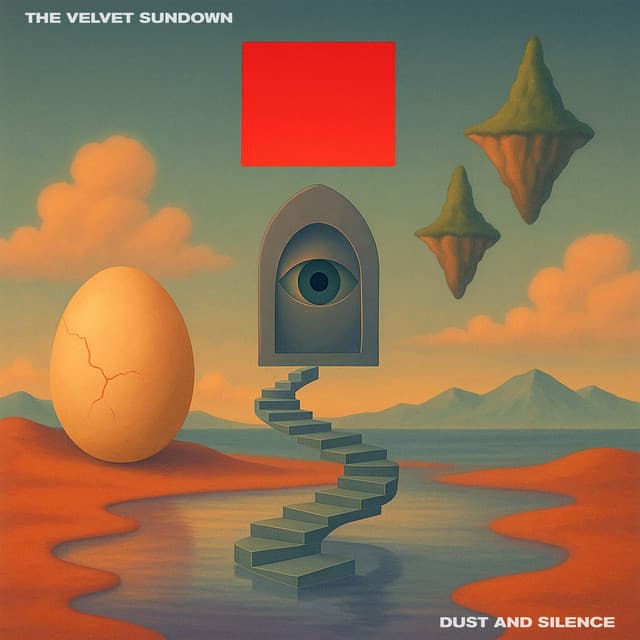
In June 2025, an indie rock band called The Velvet Sundown appeared on Spotify. They had two albums: Floating on Echoes and Dust and Silence. Their sound was confident, warm, vintage — Southern rock guitar tones, hazy reverb, the kind of thing that fits naturally into a Discover Weekly playlist. Nobody seemed to have heard of them. That was not unusual; most Spotify artists are obscure. Within weeks, they had 325,000 monthly listeners. Then 500,000. Then, briefly, over a million.
On July 3, the band confirmed on their social media accounts what Reddit users had already suspected: "a synthetic music project guided by human creative direction, and composed, voiced, and visualized with the support of artificial intelligence."
They kept releasing music.
The Velvet Sundown: a million listeners and no members
The Velvet Sundown case is the cleanest entry point into what happened to Spotify in 2025. Their albums are competent — Dust on the Wind is the most-streamed track, reaching nearly 2 million plays, and it earns its listens. The guitars have texture. The production is not sloppy. The band persona — invented backstory, invented member names, invented photographs of faces that do not exist — was constructed deliberately to look like an obscure-but-real rock act from somewhere in the American South.
The controversy was not that the music was bad. The controversy was that nobody knew.
Berklee College of Music's analysis of the case noted that the Velvet Sundown raised a structural question about Spotify's playlist placement: if the curation algorithm cannot distinguish between a five-piece band from Alabama and a text prompt about "70s-influenced Southern rock with vintage reverb," what does the algorithm actually measure? The answer, apparently: completions. Plays. Follows. The metrics of success look identical regardless of who or what generated the tracks.
The Velvet Sundown went on to release a third album, Paper Sun Rebellion, in July 2025. They had been confirmed as synthetic for less than two weeks when it dropped. It charted.
Breaking Rust: Billboard #1
If the Velvet Sundown was the viral shock, Breaking Rust was the institutional one.
In November 2025, Walk My Walk by Breaking Rust reached #1 on Billboard's Country Digital Songs chart. It had accumulated over 3 million Spotify streams in less than a month. The act — country, defiant, outlaw aesthetic, songs about grit and endurance — was created by a single individual, Aubierre Rivaldo Taylor, using generative AI tools to produce every element: vocals, instrumentation, lyrics. Breaking Rust also held the top two spots of Spotify's US Viral 50 simultaneously, with "Walk My Walk" and Livin' on Borrowed Time holding both positions. The TikTok page accrued close to 200,000 followers; "Walk My Walk" appeared in over 150,000 TikTok videos.
The Nashville response was immediate. The Washington Post covered it in December 2025 as a crisis-in-the-making for the country industry. Digital Music News pointed out that the Country Digital Songs chart measures paid downloads rather than streams, which makes it susceptible to concentrated purchases. That caveat matters for the chart claim specifically. The streaming numbers — 3 million plays in a month, a TikTok footprint that dwarfs most working country acts — are harder to dispute.
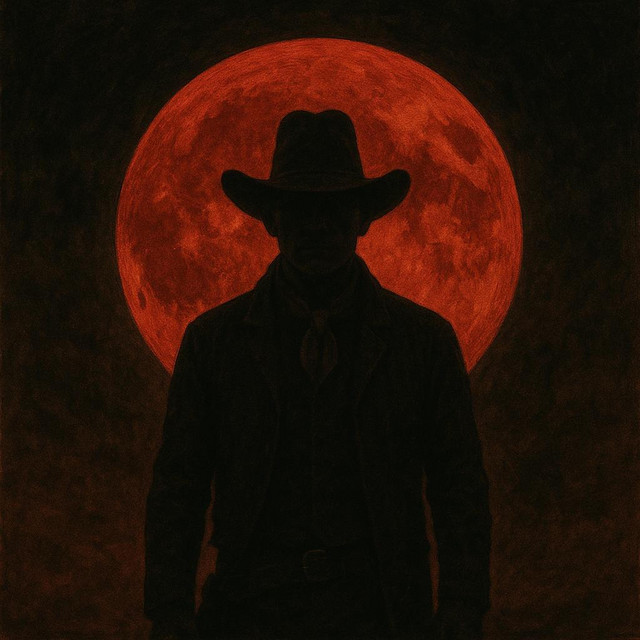
What "Walk My Walk" actually sounds like: outlaw country with enough grit to read as authentic. The vocal has the right amount of roughness. The production subscribes to the defiant-working-class register that country uses well. If you heard it driving through Texas without knowing what it was, you would not stop to question it.
IngaRose and Xania Monet: the Suno era
Suno — the AI music generator — went through a significant version jump in late 2025. Its v5 model, released that autumn, produced noticeably better vocal clarity and lyric coherence than anything that had come before. Two AI-assisted acts built on Suno reached major chart positions in its wake.
IngaRose is a songwriting project created by a human songwriter named Ingrid — human-written lyrics, personal stories, arrangements refined using Suno. The distinction matters: this is not a faceless AI account trying to pass as a band. Ingrid built a genuine social media presence (over 240,000 TikTok followers, 942,000 Spotify monthly listeners at peak) and put her real experiences into the work. Celebrate Me — soulful, acoustic, emotionally direct — reached #1 on the iTunes all-genre charts in the US, UK, France, Canada, and New Zealand in April 2026. It is a real song with real emotional content generated using a machine. Whether that makes it less real is a question the charts refused to answer.

Xania Monet went further. A Gospel-influenced R&B singer created by Mississippi poet Talisha Jones using Suno AI, Monet debuted on the Adult R&B Airplay Chart and the Hot Gospel Songs chart. Her songs reached 17 million streams in two months. Then she signed a $3 million recording contract with Hallwood Recordings — the first AI musical persona to land a major-label deal of that size. An AI persona signed a record deal. The music industry's frameworks had not prepared for that sentence.

Spotify's response: 75 million removals and a new policy
Spotify removed more than 75 million tracks in the twelve months leading up to its September 2025 policy update. The majority were AI-generated spam — low-effort ambient tracks uploaded in bulk through distribution services, designed to capture algorithmic playlist placement and collect fractions of royalties at scale. This was not an artistic problem; it was a financial fraud problem, and Spotify treated it as one.
The September 2025 policy changes addressed three areas. Labeling: distributors must now disclose AI use under the DDEX industry standard, specifying whether AI was used for vocals, instrumentation, or post-production, with plans to surface this information within the Spotify app. Fraud prevention: new review triggers for accounts uploading high volumes of similar content in short timeframes. Voice protection: explicit prohibition on AI-generated tracks designed to impersonate real artists without consent, including synthetic vocal performances mimicking a named individual.
In April 2026, Spotify announced a further step: artist verification will now require proof that a profile represents a real person or group. The Velvet Sundown's gradual build from obscurity to a million listeners through apparent organic growth would be harder to replicate under those conditions. The window was narrow and has since narrowed further.
What "genuinely good" means now
The quality question is interesting, and it has two parts.
The first part is technical. Suno v5 and Udio (its main competitor) have reached a level where casual listening does not reliably distinguish AI-generated tracks from human-made ones across many genres. The user consensus across production forums is that Suno leads on accessibility and vocal naturalness; Udio leads on emotional expression and production detail in genres like blues, soul, and country that depend on raw delivery. As of 2026, Suno has approximately 2 million paid subscribers and $300M in annual recurring revenue. Neither tool is a novelty anymore.
The second part is harder. Breaking Rust's "Walk My Walk" is a better-produced song than most country digital releases in the month it topped the chart. The Velvet Sundown's "Dust on the Wind" is more competently arranged than most acts with 50,000 monthly listeners are putting out. IngaRose's "Celebrate Me" caused real emotional responses in real people, which is the thing music is supposed to do. The question "is it good?" keeps returning the answer "often, yes," and the music industry has not worked out what to do with that.
The ghost artist problem is not that the ghosts sound bad. It is that they sound fine — and that "fine" is now a cheaper commodity than at any previous point in the history of recorded music, produced at a scale no human catalogue can match, and distributed through the same infrastructure that carries everything else.
The response from listening culture has been mixed: some listeners stop caring about provenance once they know they like a track; others feel retroactively deceived and walk away. Neither response is wrong. Both are honest reactions to a situation for which there is no established etiquette.
The ghosts are here. They are indifferent to our frameworks. And they keep releasing music.