The 35-year loop: from Moroder to Macintosh Plus, Italo-disco to vaporwave
Giorgio Moroder invented the sequenced bassline in 1977. Italian factories mass-produced a synth-led disco offshoot across the 1980s. The tapes spent two decades as thrift-store dollar finds. Then the internet slowed them down, added Greek statues, and called it vaporwave. A field guide to electronic pop's longest feedback loop.
By Gabin Fay
In 1977, a German-Italian producer named Giorgio Moroder sat in a studio in Munich and programmed a Moog synthesiser to play a single, looping bassline. No human fingers. No groove that could drift or swing. Just a voltage-controlled oscillator stepping through a sequence at a tempo that a machine would hold forever without fatigue. The resulting track — Donna Summer's "I Feel Love" — is the progenitor of everything that follows in this story: a continuous, 35-year feedback loop that runs from a Munich recording booth through a thousand Italian pressing plants, into a Portlandian's Bandcamp page, and back out into the mainstream in the form of a Max Martin production for The Weeknd.
The loop has three turns. Turn one: Moroder invents the template and Italian studios industrialise it into a genre called Italo-disco. Turn two: Italo-disco dies, decomposes into thrift-store vinyl, and is resurrected by internet-era producers who slow it down, distort it, and call it vaporwave. Turn three: synthwave and eventually mainstream pop absorb the whole chain, and Moroder — who had been in retirement — is explicitly credited, by name, on a Daft Punk album that went to number one.
→ Italo Machinery: 1977→2011→Now — the 40-track Spotify playlist (generated by Playgen)
1. Munich, 1977: the machine that built a genre
Giorgio Moroder was born in 1940 in Urtijëi, a small town in the South Tyrolean Dolomites. By the mid-1970s he had relocated to Munich and built Musicland Studios into one of the best-equipped commercial facilities in Europe. Led Zeppelin recorded there. The Rolling Stones cut It's Only Rock 'n' Roll there. But Moroder's own work was moving in a different direction entirely: electronic, sequenced, rhythmically obsessive in a way that the classic-rock clientele would have found alien.
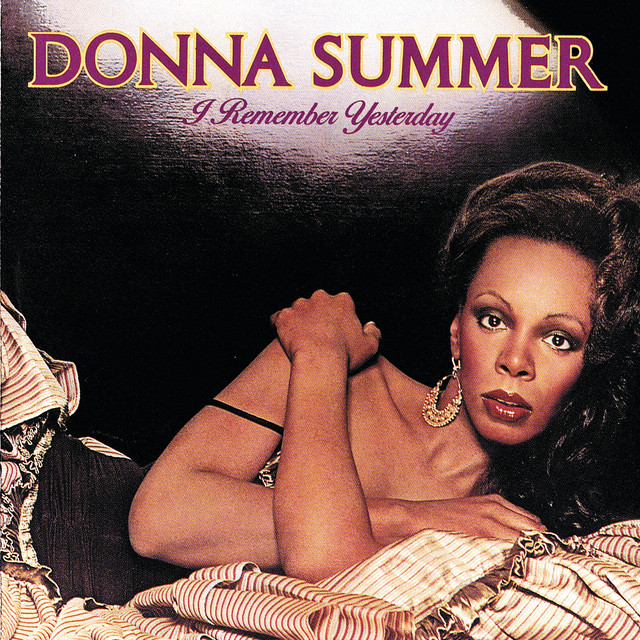
The collaboration with Donna Summer — born LaDonna Adrian Gaines in Boston, living in Germany as a session and theatre singer — started with "Love to Love You Baby" in 1975, a seventeen-minute exercise in erotic disco orchestration that Casablanca Records boss Neil Bogart had pressed to a twelve-inch and deployed on American dance floors with considerable commercial success. But that record was still a human record: live strings, conventional drums, a band playing.
"I Feel Love" in 1977 was something else. The track used no drummer. No bassist. No string players. The percussion was a drum machine; the bassline was a Moog synthesiser running through a sequencer — a device that told the synth which notes to play, in which order, at which tempo, without any human intervention after the initial programming. Moroder's innovation was to let the machine run without apologising for it. The track is relentless in the way that only a machine can be relentless: not the passionate, slightly imprecise relentlessness of James Brown's drummer, but the mathematically perfect, infinitely sustainable relentlessness of a voltage-controlled clock.
The cultural impact was immediate and personal. Brian Eno, hearing a copy in New York shortly after release, famously turned to David Bowie and said: "I have heard the sound of the future." Bowie was in the middle of the Berlin Trilogy; Eno filed the information and applied it to "Heroes", Lodger, and eventually the entire ambient series. The future that Eno identified was not just sonic — it was structural. A track built on loops, on sequenced repetition, on the substitution of a programmable machine for the expressive limitations of human players, pointed toward a mode of music-making that would define the next fifty years.
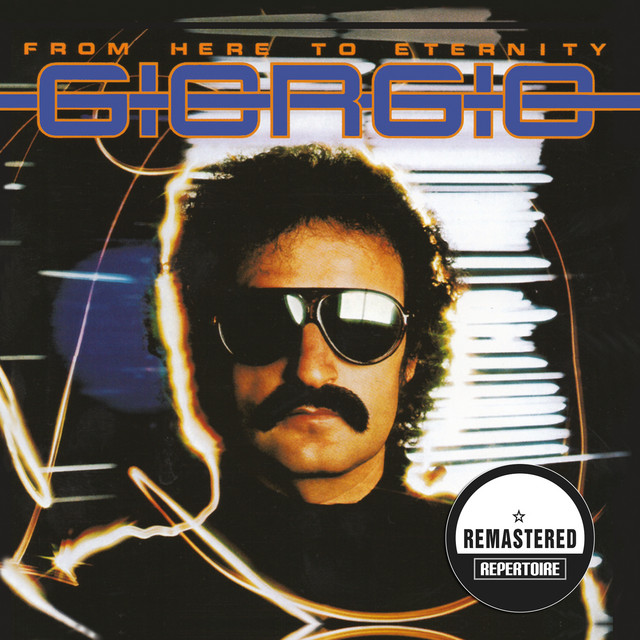
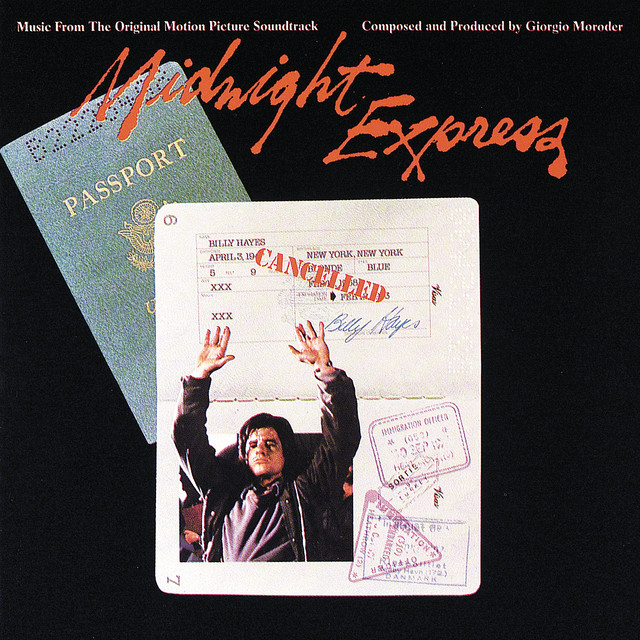
The same year, Moroder released a solo album: From Here to Eternity (1977), his own synth-disco statement, and wrote the score for the film Midnight Express (1978). The Chase — the chase sequence from that film — is one of the earliest examples of what people now call electronic film scoring: a fully synthesised, fully sequenced soundtrack built without an orchestra, deployed against a mainstream thriller at a time when most directors still considered the electronic score a low-budget compromise. Moroder won the Academy Award.
2. The Italian factory (1980–1986)
If Moroder was the inventor, Italy was the factory. Between roughly 1980 and 1986, a network of small Italian labels — Discomagic, Best Record, Time, Memory Records — pressed synth-pop twelve-inches at a rate and volume that the British or German scenes of the period could not match. The product was called Italo-disco, and its relationship to Moroder's Munich work was the relationship between a research lab and a production line: the ideas came from Munich; the manufacturing came from Milan, Rome, and a string of smaller industrial cities that had spare pressing capacity and entrepreneurial producers who recognised a market.
The Italo-disco recipe was, at its best, a precise formula: TR-808 or DMX drum machines providing the backbone; arpeggiated synthesiser bass stepping through chord sequences at machine tempo; lush string synth pads (usually a Roland Juno or Oberheim) providing harmonic warmth; and vocals split between vocoded or heavy-reverb male leads — often by Italian singers performing phonetically learned English, resulting in a charmingly surreal diction — and English-language female hooks that ran over the chorus. The formula is recognisable in thirty seconds. Once you hear it, you start finding it everywhere.
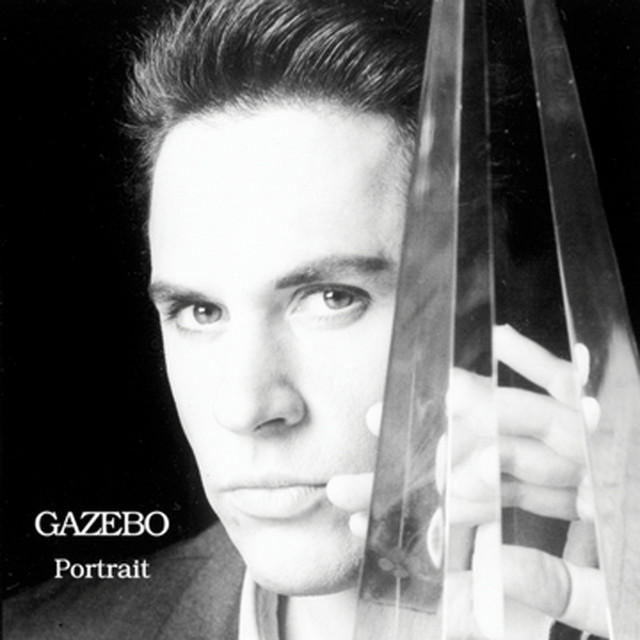
Gazebo's "I Like Chopin" (1983) is the genre's strangest hit: a melody that does, in fact, resemble Chopin (specifically the Ballade No. 1 in G minor), wrapped in synthesised strings and a TR-808 beat, sung in a lisping Italian-accented English that somehow became a European number one. The song is simultaneously absurd and genuinely affecting. The Chopin quote is real: Gazebo — the stage name of Paul Mazzolini, born in Geneva to Italian parents — was a trained pianist, and the interpolation is not accidental. The record was produced by Pierluigi Giombini and pressed on Baby Records, and it is, arguably, the moment where Italo-disco starts to seem like an art project as much as a commercial exercise.
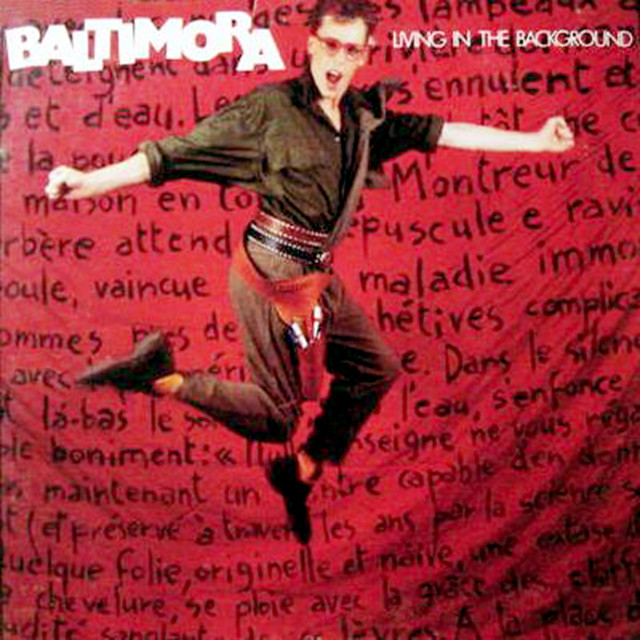
Ryan Paris's "Dolce Vita" (1983) is the genre at its most archetypal: the title means sweet life in Italian, the lyric is about a man watching a woman at a party, the bass is sequenced, the synth pad is warm and synthetic-tropical, the vocal is laconic and accented. It was a number one in France. Baltimora's "Tarzan Boy"](https://open.spotify.com/track/273uCXd7NPrInaiNqtkOrA) (1985) — written and produced by Maurizio Bassi and Naimy Hackett — went the opposite direction: exuberant, chanting, built on a three-note hook that would reappear in a Listerine television commercial twenty years later, which is how most Americans under forty know it. The voice is that of Jimmy McShane, an Irish singer who died of AIDS in 1995 and whom the song long outlived.
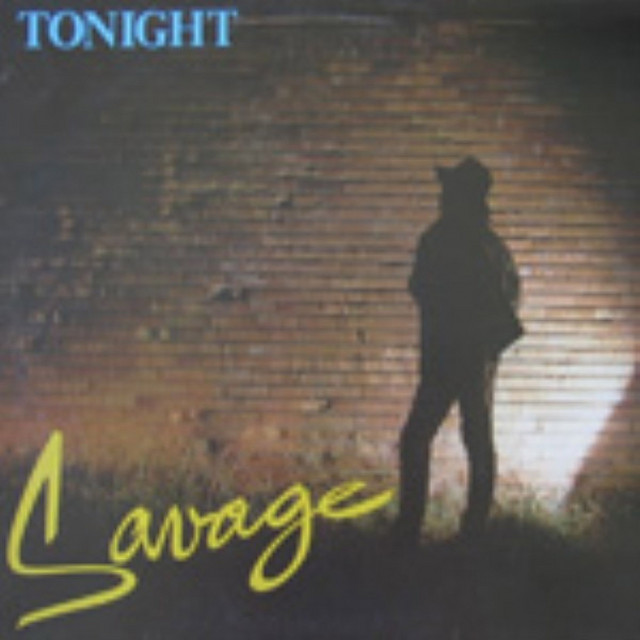
Sandy Marton's "People from Ibiza" (1984) is pure Balearic fantasy; Spagna's "Call Me" (1987) — by Ivana Spagna, a singer from Valeggio sul Mincio in Veneto — crossover pop in the Italo mould; Savage's "Don't Cry Tonight" (1983) the genre's emotional mid-tempo; Den Harrow's "Future Brain" (1985) one of its best-remembered hooks. Den Harrow was a fictional character — the handsome face on the sleeve belonged to model Tom Hooker, while the vocals were provided by various studio singers and the production by Ninety, Hooker's production alias. This was not unusual in Italo-disco. The genre ran on faces more than artists; the producer was often more important than the performer, and it was sometimes more cost-effective to build a visual character from scratch.
The key producers of the era — Mauro Farina, Roberto Zanetti, Pasquale Minieri, Claudio Simonetti — operated with an industrial efficiency that was, in retrospect, both the genre's strength and its limitation. They could turn a track around in a weekend. The quality control was variable. The best records — Valerie Dore's "The Night" (1984), Kano's "Another Life" (1983) — are genuinely beautiful objects: immaculate machine music that sounds, from fifty years of distance, like a very specific and very convincing vision of the future. The worst records sound like exactly what they were: product, knocked out to fill a dance floor for six minutes before the DJ moved on.
3. The crossover: Klein + M.B.O. and the trans-Atlantic current
The most consequential Italo-disco record in terms of what happened next was not a chart hit. Klein + M.B.O.'s "Dirty Talk" (1982) was produced by Claudio Rispoli for the Italian label Danceteria and was already stripped down by Italo standards: minimal percussion, an insistent bass riff, a female vocal so sparse it is practically a skeleton. The twelve-inch found its way to New York through the import networks that fed the city's underground dance culture, and it crossed to Larry Levan's Paradise Garage — the legendary SoHo club where Levan was, in the early 1980s, developing the sound that would become house music.
The specific chain of influence is documented, if disputed in its precise links. What is not disputed is the structural fact: Italo-disco was, at its core, the same project as what Chicago and Detroit were separately developing in the same years — music built on drum machines, synthesisers, and a production aesthetic that prioritised the physical sensation of repetition over conventional song structure. Klein + M.B.O. reached Levan. Levan played it. Levan's crowd heard it. The specific timbre of the Italo bass sequencer — its insistency, its mechanical precision, the way it locked to the kick drum with a tightness that no human bassist could replicate — entered the muscle memory of the dancers at the Paradise Garage, and from there into the producers who were building the Chicago house scene.
Larry Heard — Mr. Fingers — has cited imported European synth records as part of the sonic environment in which he developed house. Detroit techno's founding figures (Juan Atkins, Derrick May, Kevin Saunderson) were listening to European synth-pop alongside Kraftwerk, and the distinction between a German synthpop record and an Italian disco record was, from Detroit in 1984, not as large as European critics liked to imagine. Both came from the same pool of machinery and the same formal logic. The crossover was not so much a borrowing as a recognition.

4. The wilderness years (1987–2010)
Italo-disco did not decline gradually. It collapsed. The genre's commercial peak was roughly 1983–1985; by 1987 it was largely finished as a viable format for European labels. Several things happened simultaneously. The production aesthetic aged badly — the TR-808 that had sounded like the future in 1981 sounded like cheap product by 1988, because it was cheap and because every television commercial in Europe had adopted it. Eurodance moved in to occupy the floor space: faster, more emphatic, with less of the dreamy mid-tempo atmosphere that characterised Italo's best moments.
In Japan, Italo-disco was absorbed and mutated into Eurobeat — a genre that sped up the Italo template to 140 BPM and attached it to the Initial D racing anime franchise, where it persists to this day in its own sealed cultural ecosystem. The Italian producers who had made Italo-disco largely kept working, supplying the Eurobeat market through labels like Avex and Hi-NRG Attack. But the original records — the slow-to-mid-tempo twelve-inches with the expensive synth pads and the phonetically uncertain English — sat in warehouses, then in remainder bins, then in thrift stores.
By 2005, a Gazebo twelve-inch could be found at a Goodwill in Portland, Oregon for one dollar. A Ryan Paris single in a charity shop in Brussels for fifty cents. Italo-disco had become, in the collector economy, so abundant as to be essentially free. The quantity produced during the pressing-plant years — hundreds of thousands of twelve-inch singles, stacked in warehouses across Italy and Germany and distributed throughout Europe via distributors who had long since dissolved — meant that the records could not achieve scarcity. They were everywhere. Therefore they were worthless.
This is a crucial economic condition for what happened next.
5. Vektroid's Bandcamp page, 2011
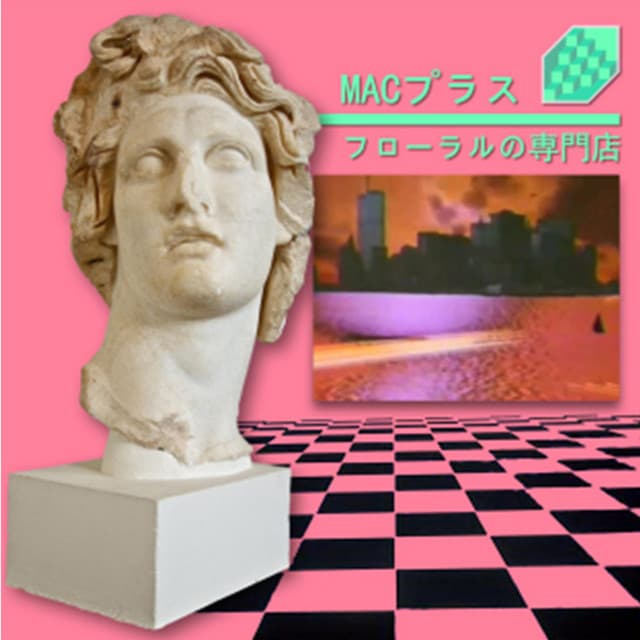
Ramona Andra Xavier, born in Portland, Oregon, released music under a shifting set of aliases throughout the early 2010s: Vektroid, New Dreams Ltd., PrismCorp Virtual Enterprises, Sacred Tapestry, and the name that the genre remembers: Macintosh Plus. Under that alias, in 2011, she released Floral Shoppe on Bandcamp — pay-what-you-want, initially free, available as a download to anyone who wanted it.
The album's lead track is "リサフランク420 / 現代のコンピュー" — a title drawn from Japanese characters meaning, approximately, "Lisa Frank 420 / Modern Computing." The sound is immediately identifiable: Diana Ross's "It's Your Move" (from the 1984 Swept Away album, a track that is itself an 80s synth-pop product of the same industrial wave) slowed down by approximately 30%, pitch-shifted accordingly, with the original's synthetic textures stretched into something that sounds like a recording playing back slightly wrong. A cassette left in a car in August. A record played at 33 RPM when it was pressed for 45.
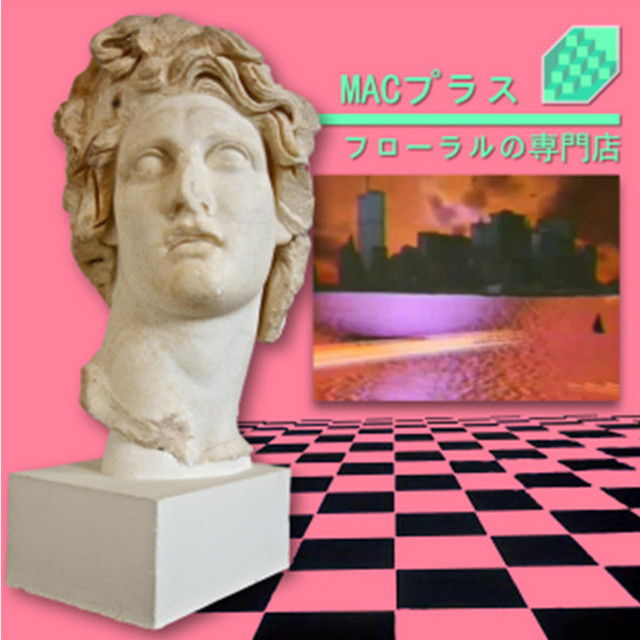
The album art is a stock image from a Windows 95-era design template: the Venus de Milo (or rather a reproduction of it), in front of a gradient, over an aesthetic that quotes every piece of business software and graphic design from the early 1990s. Greek statues. Cyan and magenta gradients. A Japanese wordmark. The aesthetic is precisely, surgically constructed to evoke a particular era of corporate optimism — the moment in the early 1990s when technology companies genuinely believed that digitisation was going to create a utopia — and to hold it at arm's length by slowing it down, degrading it, making it sound haunted.
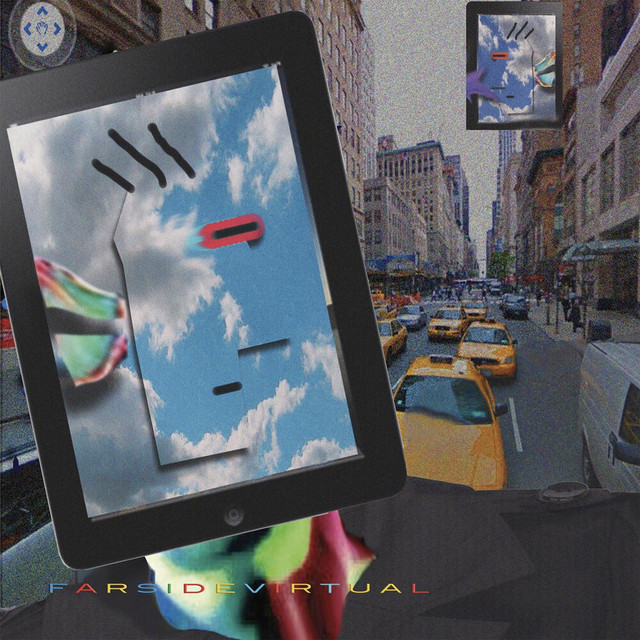
Xavier was not the first producer to work in this mode. Daniel Lopatin — better known as Oneohtrix Point Never — had released material under the alias Chuck Person as Eccojams Vol. 1 in 2010: a collection of heavily looped, pitch-shifted samples from 1980s pop and soft rock that are the direct formal ancestor of "リサフランク420." Lopatin was working from theory — he understood what the loops were doing to the source material, how the slowing and repetition functioned as a kind of temporal criticism of the songs' original commercial context. James Ferraro had released Far Side Virtual in 2011 — a conceptual album built from MIDI presets, ringtones, the sonic vocabulary of corporate digital environments — which is the proto-vaporwave conceptual statement. Ferraro's album has no sampled music; it builds entirely from the sounds that computers and phones were making in the early 2000s, repurposed into something that functions as deadpan commentary on the ambient soundtrack of late capitalism.
But Floral Shoppe was the record that moved from avant-garde gesture to genre-founding moment. The combination of Xavier's specific aesthetic choices — the Japanese text, the mallpunk visual referencing, the pitch-shifted soul — and the particular moment (2011: just as YouTube's music-sharing function was becoming a primary vector for underground music discovery) created a feedback loop. The track spread. The aesthetic was reproducible. A genre coalesced.
6. The vaporwave ecosystem and its offshoots
Vaporwave proliferated fast, because the barrier to entry was near zero. The tools were free or cheap (Audacity, FL Studio, GarageBand); the source material was abundant (thirty years of 80s synth-pop, city-pop, smooth jazz, and corporate ambient music sat in the public domain of the internet); the distribution was Bandcamp, where an album could go live for nothing. The genre's production community was almost entirely anonymous or pseudonymous, operating under artist names that read like error messages or corporate memos: 情報デスクVIRTUAL, Internet Club, HKE, Cat System Corp.
The core aesthetic remained consistent: slowed and reverbed source material (usually from the 1980s or early 1990s); visual design that quoted Windows 95, Japanese kanji, Greek sculpture, consumer electronics, and shopping mall architecture; a deliberate affect of nostalgic alienation — the past rendered uncanny by distortion, repetition, and the removal of the original track's commercial context. The genre was making a specific argument about consumer culture and digital nostalgia, though most of its producers would have denied making any argument at all.
Within two or three years, vaporwave had produced several distinct sub-genres:
Future funk was the danceable variant, typically faster (around 100 BPM) and built on heavily chopped French-touch-style edits of Japanese city-pop — the Japanese pop of the late 1970s and 1980s (Anri, Mariya Takeuchi, Tatsuro Yamashita) that was itself an influence on the Italo-disco aesthetic. Yung Bae — a Portland producer, naturally — was the genre's most commercially successful figure; "I Want Your Love" from Bae (2016) is the archetype: a chopped vocal sample over a filtered bass loop, running at a tempo that invites actual dancing rather than ambient contemplation. Macross 82-99 pushed future funk closer to Japanese pop and anime aesthetic. Night Tempo brought the city-pop influence explicitly to the fore, building careers around sampling and recontextualising the original Japanese 80s material.
The genre's relationship to Italo-disco was structural rather than explicit. Vaporwave producers were mostly sampling American 80s pop and Japanese city-pop, not Italian twelve-inches. But the formal logic — slowed-down synth-pop from a specific historical moment, processed to accentuate its synthetic qualities, deployed against visual aesthetics of the same era — is identical. Vaporwave is Italo-disco's grandchild by way of the sample-based composition methods of hip-hop. The dollar-bin Gazebo twelve-inches and the dollar-bin Diana Ross 45s were in the same thrift stores; the producers just happened to reach for the Ross.
7. Synthwave: the other loop-closure
While vaporwave was building a genre from slowed-down samples, a parallel movement was reconstructing the Moroder aesthetic from scratch — playing synthesisers live rather than manipulating recordings, building beats by hand rather than time-stretching existing ones. The genre acquired various names: synthwave, outrun, retrowave. The common thread was a conscious return to the sonic vocabulary of the late 1970s and early 1980s — the Oberheim OB-Xa, the Roland Juno-60, the DX7 FM-synthesis pad, the Linn LM-1 drum machine — deployed as explicit homage rather than modernisation.
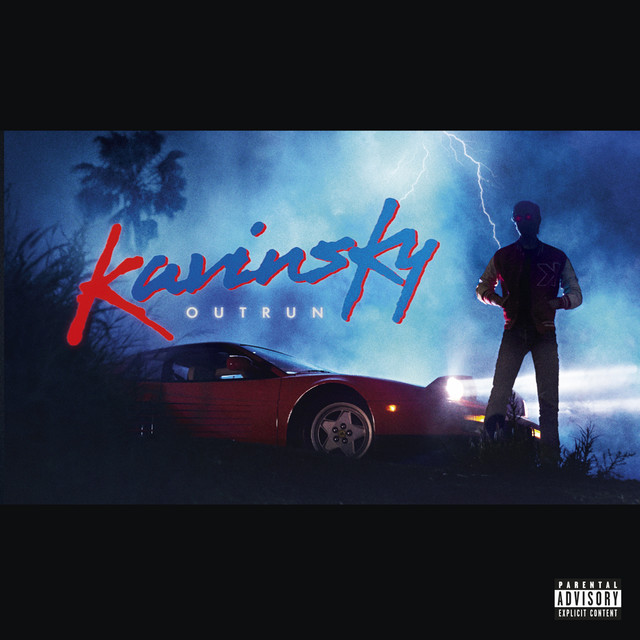
Kavinsky — the artist project of Frenchman Vincent Belorgey — released "Nightcall" in 2010 and deployed it to devastating effect on the Drive soundtrack in 2011. The track uses a Moroder-era bass synth pattern and a female vocal that quotes the emotional temperature of Italo-disco while the production is clean and contemporary. The Drive soundtrack moment was the genre's mainstream breakthrough: suddenly, synthesiser music built on explicit 80s nostalgia was in arthouse cinema. "Testarossa Autodrive" from Kavinsky's later OutRun album makes the Ferrari-era Italian aesthetic even more explicit.
Carpenter Brut was harder, louder, closer to metal — "Le Perv" from TRILOGY runs Moroder's sequenced bass through an aesthetic closer to Goblin's horror-film scoring than to the paradise-garage floor. Mitch Murder's "Frantic Aerobics" from Current Events is a more affectionate tribute — the aerobics-video aesthetic, the perfectly reproduced DX7 mallets, the hi-hat patterns from a mid-80s Linn drum.
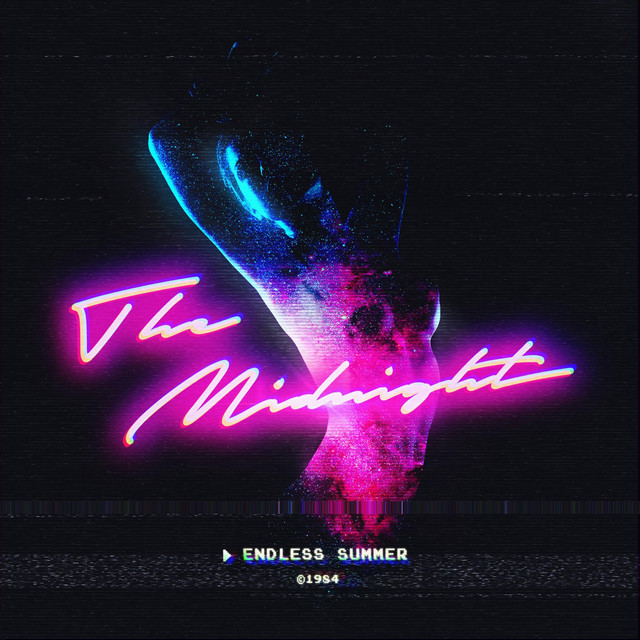
The most commercially successful branch of synthwave turned out to be The Midnight — Tim McEwan and Tyler Lyle, a production pair from Atlanta and Nashville working in Los Angeles. Their Spotify numbers dwarf the rest of the genre combined, partly because their aesthetic is more accessible (the Moroder influence is filtered through 80s soft rock rather than Italo-disco), partly because the algorithm has been disproportionately generous to them. "Sunset" from Endless Summer (2016) is the entry point: a sequenced bass, a saxophone lead (by Mike Doyle, who appears on most of their records), and a production that sounds like a John Hughes film shot in Los Angeles in 1986.
8. The loop closes: Daft Punk, The Weeknd, and Moroder's return
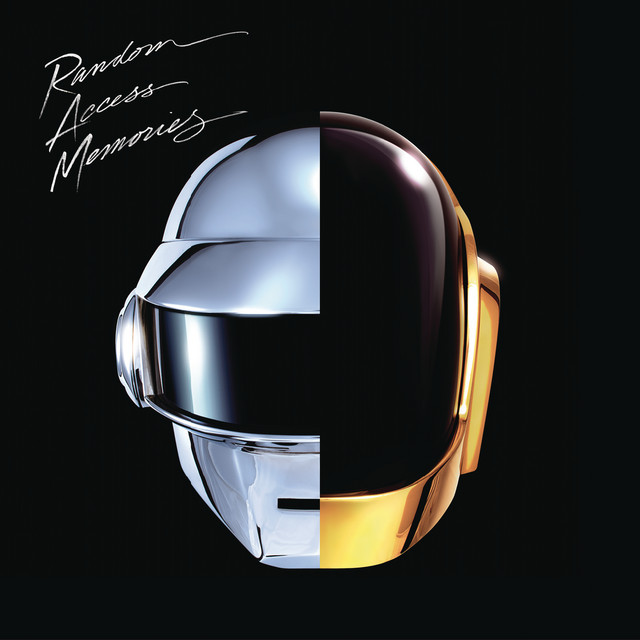
The most explicit acknowledgment of what had been built came in 2013. Daft Punk — Guy-Manuel de Homem-Christo and Thomas Bangalter, who had spent their career in a long, sophisticated conversation with the history of electronic music — released Random Access Memories on Columbia Records. The album was a studio recording made with human musicians: session players, live drums, real horns, proper string sections. The formal thesis was the opposite of Moroder's: the reassertion of the human musician inside the electronic framework.
But track four — "Giorgio by Moroder" — was a nine-minute spoken-word piece in which Moroder himself described, in lightly accented English, the sequence of events that led to "I Feel Love." He talks about the Moog, about the sequencer, about running the bass through the machine and recognising that what came out was something new. The track then builds — gradually, across several minutes — into a piece of sequenced electronic music that is, essentially, a contemporary version of what Moroder had done in 1977. Daft Punk were not sampling or quoting Moroder; they were recreating the method, with him in the room, narrating.
The album went to number one in thirty-two countries. Moroder, who had been largely in retirement since the early 1990s, received a Grammy for the collaboration. The chain was explicit: here was the inventor, credited by name, on a record that went viral in the same internet moment that vaporwave was flourishing and synthwave was building its Spotify following.
The same year, Donna Summer — who had continued releasing music sporadically after the Casablanca years, who had spent three decades living on "I Feel Love" royalties and the slow revival of 70s disco's critical reputation — died of lung cancer in Naples, Florida. She was sixty-three. She had never been an Italo-disco producer; she was a singer who happened to be in the right Munich studio at the right moment. But "I Feel Love" had outlived every genre that claimed it.
The final piece of the loop arrived in 2019. The Weeknd's "Blinding Lights" — produced by Max Martin and Oscar Holter — is, structurally and sonically, a Moroder pastiche. The bass arpeggio is the direct descendant of the "I Feel Love" sequencer pattern. The synth pad is an Oberheim or its digital equivalent. The kick drum is positioned exactly as Moroder would have positioned it. The song reached number one in over thirty countries, set a Billboard Hot 100 record for longest chart run, and was performed by The Weeknd at a Super Bowl halftime show in 2021 to an audience of ninety-six million people. The instrument at the centre of it — the sequenced synthesiser bass — had been invented in a Munich recording studio forty-two years earlier.
Martin and Holter were aware of what they were doing. The "Blinding Lights" production has been discussed in interviews as deliberately referencing the "I Feel Love" template. This was not an accident or an unconscious influence; it was a choice, made by professional hitmakers who had studied the history and concluded that Moroder's template, updated with contemporary production values, was still the most effective piece of pop machinery ever designed.
9. The archaeology of a loop
What does it mean that this particular loop persisted for thirty-five years? Several things, most of which are architectural rather than aesthetic.
First: the Moroder template is a minimum-viable machine for making people move. A sequenced bass at 120–130 BPM, locked to a kick drum, with a chord progression that provides emotional content and a melody that the human voice can ride — this is, it turns out, remarkably close to the optimal formula for a dance track. Italo-disco industrialised it. House music refined it. Techno radicalised it. Synthwave aestheticised it. Vaporwave critiqued it. Pop music kept using it. The formula has not become less effective.
Second: the thrift-store economics of Italo-disco made it uniquely available for reprocessing. A genre that had been pressed in enormous quantities and then abandoned — that had flooded the dollar bins of charity shops and thrift stores across Europe and America — was, in the early 2010s, the most abundant source of synth-pop source material in the world. The vaporwave producers who were reaching for Fleetwood Mac and Diana Ross and Japanese city-pop could just as easily have reached for Italian twelve-inches. Some did. The ones who did found that the formal qualities of Italo-disco — the pure, uncontaminated machine sound, the absence of organic elements that might resist manipulation — made it particularly amenable to slowing down, pitch-shifting, and looping.
Third: nostalgia compounds. The listeners who made "Blinding Lights" a record-breaking chart run in 2019 were not the people who danced to "I Feel Love" in 1977. They were people who had grown up in the 1980s and 1990s — people for whom the synthesiser sounds of the Moroder era were already nostalgic when The Midnight and Kavinsky were producing them. Vaporwave offered a nostalgia for an era that many of its listeners had not personally experienced; synthwave offered a more direct line to a specific demographic memory. But in both cases, the appeal was retrospective, and Moroder's original machines provided the material.
The loop runs: Munich studio, 1977 → Italian pressing plants, 1980–1986 → dollar bins, 1987–2010 → Bandcamp and SoundCloud, 2011 → Spotify algorithm, 2014–2019 → Super Bowl halftime show, 2021. The sequencer that Giorgio Moroder programmed in Munich has never, in forty-seven years, stopped running.
Sources
https://pitchfork.com/features/article/vaporwave-and-the-pop-artifact/ https://www.theguardian.com/music/2013/may/09/giorgio-moroder-interview-daft-punk https://www.factmag.com/2012/06/12/the-history-of-italo-disco/ https://www.vice.com/en/article/vaporwave-is-dead-long-live-vaporwave/ https://www.theguardian.com/music/2016/feb/04/vaporwave-explained-history-context https://www.npr.org/2019/12/27/791650668/blinding-lights-the-weeknd https://www.rollingstone.com/music/music-features/giorgio-moroder-random-access-memories-daft-punk-interview-104148/ https://www.allmusic.com/style/italo-disco-ma0000002598 https://www.discogs.com/genre/Electronic?style=Italo-Disco https://www.residentadvisor.net/features/2038 https://daily.redbullmusicacademy.com/2016/10/giorgio-moroder-lecture https://www.nytimes.com/2012/05/18/arts/music/donna-summer-pop-star-dies-at-63.html https://pitchfork.com/reviews/albums/17613-james-ferraro-far-side-virtual/ https://en.wikipedia.org/wiki/Italo_disco https://en.wikipedia.org/wiki/Vaporwave