Somebody Once Told Me the Internet Would Do This to Songs
A complete field guide to the meme song — from Badger Badger Badger and Numa Numa through Chocolate Rain, Gangnam Style, Harlem Shake, Coffin Dance, and the TikTok audio wars. 100 songs, five YouTube links that all go to exactly the same place.
By Gabin Fay
The internet didn't invent music. It invented second lives for songs. A 1987 British synth-pop single spent seventeen years as a minor hit before becoming the most reliable prank in digital history. A Moldovan pop song recorded in Bucharest in 2003 became the founding document of internet video culture the following December, when a twenty-year-old from New Jersey filmed himself lip-syncing to it at his desk and uploaded the clip to Newgrounds. A 1971 progressive rock instrumental became, via a 2012 anime adaptation and a joke about cliffhangers, the unofficial audio signature for every unresolved situation across the English-speaking internet.
These are not the songs that critics write about. They constitute a distinct canon — not of quality but of function. Understanding them means understanding how information, humor, and culture actually move online.
This is the whole history, or as much of it as fits in one document. Five of the YouTube links below go to the same place. That's a clue, not a spoiler.
→ Every Meme Song Ever — the 100-track playlist on Spotify (100 tracks, generated by Playgen)
Era I: Flash and Forums (2001–2005) — Before Viral Had a Name
The concept of a "viral" song did not exist in 2001. US broadband penetration was around 10%, and most users were on dial-up connections too slow to stream audio. What existed instead was a loose federation of flash-animation and file-sharing communities — Newgrounds, eBaum's World, Albino Blacksheep, Something Awful — passing content between each other through direct links and forum posts, without any central platform. The songs that spread had to be compressible, loopable, and preferably weird.
Weebl's Stuff is the canonical example. British animator Jonti Picking began posting looping Flash animations in 2002. Badger Badger Badger — published September 9, 2003 — is a fifteen-second loop of animated badgers marching to a song that repeats the word "badger" indefinitely, interrupted periodically by a snake and a mushroom. It has no narrative and no resolution. It received over two million page views in its first week. The joke is structural: it doesn't end, and the humor comes from how long you watch before closing the tab. Kenya (2004) and Magical Trevor (2004) followed the same logic. Weebl essentially invented the looping internet video as a genre.
Peanut Butter Jelly Time, produced by the Buckwheat Boyz, spread through AIM buddy profiles and email chains in 2002. A dancing cartoon banana singing about peanut butter and jelly. No context required.
Tunak Tunak Tun by Daler Mehndi arrived on the Indian internet in 1998 and reached Western forums around 2002–2003. The backstory is the entire context: Mehndi had been criticized for filling his videos with attractive backup dancers. His response was to produce a video in which he appears as every performer — multiple chroma-key copies of himself dancing against colorful digital backgrounds. It was the first Indian music video made with full chroma-key technology. The song is Punjabi bhangra; the video's bizarre energy translated immediately to an international audience that understood zero words of it.
Ievan Polkka — Loituma's 1995 Finnish folk recording — entered internet canon through a 2006 Flash animation of a character from the anime Bleach spinning a spring onion in time to the song's wordless scat section. The animation, known as Leekspin, spread from 4chan and Something Awful to Nico Nico Douga in Japan, becoming one of the first videos uploaded to that platform when it launched in March 2007. Loituma's original album had sold modestly in Scandinavia. The spring-onion version brought them a generation of fans who had never heard of Finland.
Caramelldansen — Swedish pop group Caramell's 2001 track from Supergott — followed the same path. A sped-up version was posted to 4chan in 2006 and paired with an animated GIF from a Japanese visual novel. The resulting "Uma Uma" boom hit Nico Nico Douga in late 2007, with thousands of fan-made iterations. The meme reached Western YouTube in 2008.
The Hamster Dance — based on a sped-up sample of Roger Miller's 1963 "Whistle Stop" — began circulating in 1998 on a Geocities fan page built by Canadian student Deidre LaCarte as a tribute to her hamster, Hampton. By 1999 it had received 17 million visits in a single day. Hampton Hamster Records released an official version in 2000 that reached #4 in the UK. The internet gave a Geocities fan page a chart hit.
The Ultimate Showdown of Ultimate Destiny by Lemon Demon (2005) was the first true internet-native viral song: created by seventeen-year-old Neil Cicierega for an audience that grew up online, with no conventional distribution ambitions. It won the Newgrounds Flash Film Festival in 2005. Every fictional and real character in existence fights each other. It has a bridge. On Spotify →
And then, on December 6, 2004: Numa Numa.
Gary Brolsma, a twenty-year-old from Saddle Brook, New Jersey, sat at his desktop computer, opened his webcam software, and recorded himself lip-syncing and dancing to Dragostea Din Tei — a Eurodance track by Moldovan pop group O-Zone, released in Romania in 2003 and a #1 hit across much of Eastern Europe that year. He uploaded the video to Newgrounds and called it "Numa Numa Dance." Within weeks it had received millions of views. By 2006 it had been covered in the New York Times as an example of a new phenomenon — the viral video — and cited by NBC News and a BBC documentary on internet culture. Gary Brolsma briefly became so famous, in the way that 2004 permitted such a thing, that he publicly said he wished he hadn't uploaded the video.
He changed his mind eventually. He uploaded a sequel in 2006.
The original O-Zone television broadcast from Romania, archived from 2004 → watch here. (But if you want to actually hear the song: Dragostea Din Tei — O-Zone)
The Numa Numa video matters because it established the template for everything that followed: an ordinary person, at home, performing joy at a piece of music for its own sake, with no production value or professional aspiration. The video was about being inside the song, and the internet recognized that immediately.
Era II: YouTube and 4chan (2006–2010) — The Infrastructure Arrives
YouTube launched on February 14, 2005. Google acquired it for $1.65 billion in October 2006. By 2007 it had 65,000 new videos uploaded per day and 100 million daily views. For the first time there was a single platform where viral video could cohere — where a link could resolve to something any internet user could watch without a plugin or download.
4chan was already three years old by this point, and its random board, /b/, had developed into the most productive meme-generation community on the internet. The combination — a generation platform and a distribution platform within linking distance of each other — produced an explosion.
Chocolate Rain, uploaded to YouTube on April 22, 2007 by Tay Zonday — real name Adam Bahner, a doctoral student at the University of Minnesota — is the defining YouTube song of the era's first year. Zonday's deep bass voice, which sounds nothing like his face, paired with surreally earnest lyrics about systemic racism ("Chocolate rain / Some stay dry and others feel the pain"), became a meme and a genuine musical statement simultaneously. 4chan found it in July 2007 and it was everywhere by August. He was the first YouTuber to achieve something like pop-star fame from a single upload — covered by Wired, invited on Jimmy Kimmel Live, parodied in a $30,000 Cherry Chocolate Diet Dr Pepper ad. In a 2022 retrospective, Zonday described the strange position of having made something earnest that the internet received as comic — and chose to own the irony completely.
Tay Zonday talking through how it happened, in his own words → watch here. (But if you want to actually hear the song: Chocolate Rain — Tay Zonday)
Then: the Rick Roll.
Never Gonna Give You Up by Rick Astley was released on July 27, 1987. It reached #1 in the UK and #1 in the United States. Then it largely disappeared from active culture for fifteen years. It was a well-produced bubblegum pop single — written by Stock Aitken Waterman, who wrote much of the UK chart in the late 1980s — with a distinctive video featuring a twenty-one-year-old Astley dancing in a trench coat.
The meme began on May 15, 2007. A 4chan user on /v/ named Shawn Cotter — an airman in the US Air Force, stationed in South Korea, nineteen years old — uploaded "Never Gonna Give You Up" to YouTube and linked to it in place of what he described as a trailer for the as-yet-unreleased Grand Theft Auto IV. Users who clicked expecting GTA footage got Rick Astley. The mechanics came from an earlier 4chan joke called "duckrolling," in which moderator Christopher "moot" Poole had implemented a word filter turning "egg" into "duck," and users linked to a rolling-duck image in place of promised content. Rickrolling was duckrolling with a more culturally specific payload.
The meme hit critical mass in early 2008. In February, the hacker collective Anonymous — then protesting the Church of Scientology — used rickrolling as a primary tactic. On April 1, 2008, YouTube redirected every featured video on its homepage to "Never Gonna Give You Up" as an April Fools' prank. Rick Astley appeared on the Macy's Thanksgiving Day Parade float that same year, performing the song live. A mainstream institution willingly participating in its own rickrolling.
Astley has said in multiple interviews that he finds the meme genuinely funny, and used the renewed attention to rebuild a performing career that had stalled in the 1990s. His 2016 comeback album 50 reached #1 in the UK.
Running in the 90s by Max Coveri — a 1988 Eurodance track by Italian artist Maurizio De Jorio — became an internet meme via the 1998 Japanese anime Initial D, which used Eurobeat music as the soundtrack for its mountain-road street-racing sequences. By 2010 the meme format had solidified: anything involving speed, acceleration, or a dramatic arrival could be set to this track, and the combination produced a specific comic register.
Sandstorm by Darude — Finnish trance producer Ville Virtanen's 1999 track — built its meme life on Twitch in 2013. Viewers in chat began answering any "song name?" question with "Darude — Sandstorm" regardless of what was actually playing. The reply became so common it was essentially a verbal reflex. The joke works because "Sandstorm" is one of the most immediately identifiable melodies in electronic music, which makes it simultaneously the most and least plausible answer to any song-name question. It is a joke about the impossibility of naming songs, delivered by naming the wrong song with extreme confidence.
Era III: The Factory Opens (2011–2013)
"Friday" by Rebecca Black was uploaded to YouTube on February 10, 2011. Black was thirteen. Her mother had paid ARK Music Factory — a vanity label that produced songs for teenagers at parental expense — $2,000 to write and record it. The video received around 4,000 views in its first month. On March 11, comedian Michael J. Nelson tweeted it as "the worst video ever made." The Guardian, the LA Times, and dozens of blogs picked it up. By March 25 it had 30 million views; at its peak, 900,000 views per hour.
The discourse around "Friday" is where the "so bad it's good" framework first encountered a real human at its center. Black received death threats and had to be homeschooled. The internet found this funny for approximately six months before the collective embarrassment set in. She has since released music on her own terms and spoken about the experience with considerable clarity.
Gangnam Style — 강남스타일 — released July 15, 2012 by South Korean musician PSY (Park Jae-sang) — is the first YouTube video to reach one billion views. Then two billion. Then three. Then four. It currently stands at approximately 5.4 billion views. It spent five weeks at #1 in the UK, reached #2 in the United States, and was the first Korean song to top the Billboard Hot 100 Digital Songs chart. The song is a satire of Seoul's Gangnam district — Korea's equivalent of Beverly Hills — delivered via an absurdist horse-riding dance that PSY performed across the city. The irony was largely lost on Western audiences, who processed it as pure spectacle. PSY has said he knew the joke would travel without its local context and designed it accordingly.
PSY's SBS television debut in July 2012, before any Western outlet had noticed → watch here. (But if you want to hear the song: Gangnam Style — PSY)
The Harlem Shake meme, beginning January 30, 2013, is the most efficient meme format ever devised. Template: fifteen seconds of one person dancing alone to the opening of Baauer's track; the beat drops; everyone is suddenly dancing in chaos and costumes. No editing skill, no budget, minimal preparation. By March 24, 2013, the cumulative view count across all Harlem Shake videos had hit one billion — forty days after the format's first appearance. The wrinkle: the Harlem shake is a real dance that originated in Harlem in the 1980s with no connection to the meme's format. When it went viral, residents of Harlem responded publicly, pointing out that this bore no resemblance to what they had spent years developing.
What Does the Fox Say? by Norwegian comedy duo Ylvis — released September 3, 2013 — was intended as a throwaway joke for a Norwegian talk show and became a #6 US hit with 1.4 billion YouTube views. The song asks, with total sincerity of production, what sound a fox makes, then answers with nonsense syllables delivered with complete melodic commitment. It was nominated for a Grammy. Ylvis have publicly expressed bafflement.
Cotton Eye Joe by Rednex — a Swedish eurodance production from 1994, built on a traditional American folk melody — refuses to die for reasons that are genuinely difficult to articulate. It exists in a specific register of nostalgic absurdity — the fiddle sample, the line "if it hadn't been for Cotton-Eye Joe," the inexplicable energy — that makes it the correct musical choice for an extremely specific and recurring kind of moment. Sporting events have used it for thirty years. TikTok rediscovers it every eighteen months.
Era IV: The Irony Economy (2014–2018)
Between 2014 and 2018, the dominant mode of internet humor shifted from "this thing is genuinely funny" to "this thing is funny because of its relationship to the concept of being funny." Meme songs of this era are largely defined by ironic appreciation of previously embarrassing material — a structural feature of a culture that had been producing and discarding trends fast enough that multiple generations of embarrassment were available for rehabilitation.
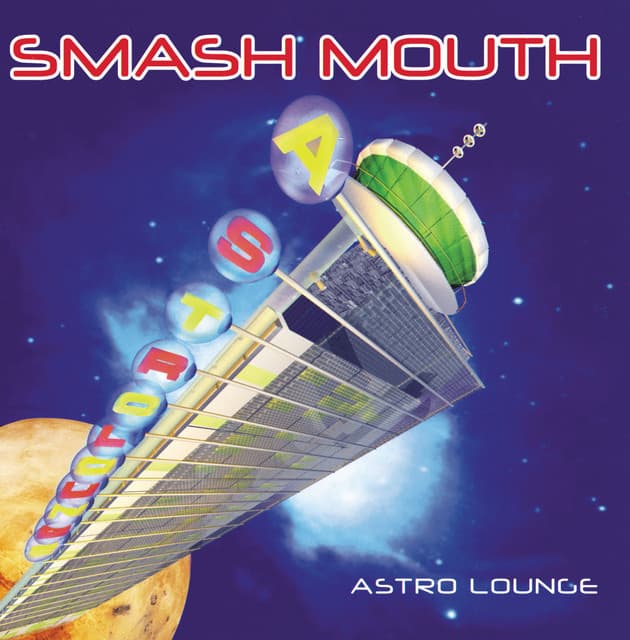
All Star by Smash Mouth was released in 1999 and used as the opening of Shrek (2001). Then nobody thought about it for a decade. The revival began around 2015 and has never fully stopped. The meme forms include: All Star with the pitch shifted until it sounds like a different song; All Star with every other word removed; All Star slowed to incoherence; All Star played on instruments for which it was not written; other songs replaced by All Star mid-way through. NPR noted it "seems like it was made to be remixed, mashed-up and squeezed through the meme machine." The joke is sustained by participants who genuinely love both the song and the joke about the song simultaneously.
Shooting Stars by Bag Raiders, an Australian electronic duo, was released in 2009. For eight years it was a well-regarded club track. In February 2017 a meme format appeared: videos in which people — or animals, or objects — were shown in a normal scene before suddenly floating skyward while the song's ethereal synth melody played. The meme required no editing skill beyond a cut and a floating effect. It spread across Reddit and Twitter within days, reaching tens of millions of views across thousands of iterations.
The Bag Raiders extended director's cut of the original video → watch here. (But if you want to hear the song: Shooting Stars — Bag Raiders)
PPAP (Pen Pineapple Apple Pen) by Piko-Taro — the stage persona of Japanese comedian Kosaka Daimaoh — was uploaded to YouTube on August 25, 2016. Forty-five seconds. A man in a leopard-print suit demonstrating combinatorial logic involving a pen, a pineapple, and an apple. On September 27, Justin Bieber tweeted that it was his "favorite video on the Internet." It received 1.5 million views per day after that. By 2017 it had over 200 million views and set a Guinness World Record as the shortest song to top the iTunes Japan charts.
We Are Number One — the villain song from the Icelandic children's television series LazyTown (Season 2, 2014) — became a meme in 2016 following a fundraising campaign for Stefán Karl Stefánsson, the actor who played villain Robbie Rotten and had been diagnosed with pancreatic cancer. The internet made the song go globally viral as a fundraising mechanism. Stefánsson received both the funds and worldwide recognition for a performance he had originally given to Icelandic children. The song itself is absurdly well-constructed: the villain's choreography, the brass arrangement, and the delivery are genuinely excellent. Stefánsson died in 2018. The song has 300 million YouTube views.
Roundabout by Yes — an eight-minute progressive rock piece from Fragile (1971) — entered internet culture through JoJo's Bizarre Adventure, Hirohiko Araki's manga series, whose 2012 anime adaptation used the song as its ending theme. The "To Be Continued" meme format emerged in 2016: a clip would reach a dramatic or absurd moment, freeze-frame, and cut to the opening bass notes of "Roundabout" before the screen read "To Be Continued →." The format works because the bass line is immediately recognizable and because the combination signals unresolved tension with perfect comic timing. Yes recorded this in a London studio in 1971.
Seven Nation Army by The White Stripes is the best example of a song the internet did not make a meme of — that sports crowds made a meme of — and the internet then inherited. The riff's transformation into a stadium chant began in Bruges, Belgium, in autumn 2003, at a football match involving Club Brugge and AC Milan. Italian supporters took it to the 2006 World Cup; Italy won the tournament, and the chant spread across the entire European sporting ecosystem. By 2010 it was a global reflex, sung by crowds who had never heard the album it came from.
Era V: TikTok Rewrites the Physics (2019–2023)
TikTok's defining contribution to the meme song is the audio clip: not a full track but a specific excerpt — often three to fifteen seconds — that becomes the sonic signature of a meme format. This creates a two-tier economy: the original song and the clip, which circulate independently. Understanding which tier is generating the culture is not always straightforward.
The Coffin Dance / Astronomia meme began on February 26, 2020. A TikTok user posted a video of a skier falling on the slopes, cut to footage of the Dancing Pallbearers — six Ghanaian pallbearers from a funeral service run by entrepreneur Benjamin Aidoo, who carry coffins while dancing to celebrate the deceased's life — set to Astronomia, a 2010 EDM track by Vicetone and Russian composer Tony Igy. The format spread globally in March 2020, days before the pandemic lockdowns began, and became the defining meme of the pandemic's first months: any failure, any accident, any bad news could be followed by the dancing pallbearers.
Aidoo's crew runs a real business — Nana Otafrijah Pallbearers — that offers funeral dancing as a paid service. The documentary of how this Ghanaian practice became the world's most-viewed meme format → watch here. (But if you want to hear the song: Astronomia — Vicetone & Tony Igy)
The Sea Shanty moment arrived in January 2021, when Nathan Evans — a postman from Airdrie, Scotland — posted a TikTok of himself singing Wellerman, a nineteenth-century New Zealand whaling song. The video received 3.3 million views within days. Within a week, TikTok's duet feature had produced hundreds of layered versions — singers adding harmony, basslines, percussion, full arrangements — in what the press called "ShantyTok." Evans signed to Polydor Records within weeks. The official version reached #1 in the UK on January 22, 2021. He had been a postman seven days before the chart position.
The Wellerman moment is the clearest demonstration of what TikTok's duet feature actually enables: collective music-making by people who do not know each other, in real time, producing a performance no individual could have made alone. The shipping company T. Ware & Co. Ltd wrote "Wellerman" as a "come-all-ye" song, sung by sailors to ease collective labor. The form fit the medium.
Nathan Evans' first acoustic recording of the song, before the TikTok → watch here. (But if you want to hear the song: Wellerman — Nathan Evans)
The "Oh No" sound — three descending notes and the phrase "oh no / oh no / oh no no no no no" — is a TikTok audio clip that originated from Capone's 2002 remix of "Remember (Walking in the Sand)" by The Shangri-Las (1964). The sample was essentially unknown until early 2021, when a TikTok creator paired it with a transition video, and the format — person walks toward camera looking normal, cut to: disaster — became one of the most-used audio clips of 2021. The Shangri-Las recorded the original in 1964 for Red Bird Records, produced by George "Shadow" Morton. It was the group's first single. The internet discovered it sixty years later through a three-second sample.
Running Up That Hill (A Deal with God) by Kate Bush, released 1985, re-entered the charts in May 2022 after being featured in Stranger Things Season 4. It reached #1 in the UK — Bush's first since "Wuthering Heights" in 1978 — and charted in 44 countries simultaneously. Bush, famously protective of her work's usage, called the placement "pure joy." The song had been streaming for years; it required a specific dramatic scene in a specific show to activate its latent potential. It is the clearest example of the streaming era's version of the meme effect: not a joke, not a format, but a sudden cultural moment that converts passive availability into active phenomenon.
Baby Shark by Pinkfong — the South Korean entertainment company's 2016 version of a children's song with origins in summer-camp call-and-response from the 1990s — became the most-viewed YouTube video of all time on November 2, 2020, surpassing "Despacito" with 7.04 billion views. It currently stands at approximately 14 billion views. The song is two minutes of a family of sharks introduced one by one. There is no mechanism by which it will be overtaken.
The Eternal Songs: What Never Leaves
Some songs entered meme culture and never left. They have been in continuous circulation for ten, fifteen, twenty years, generating new formats and new contexts without exhausting themselves.
Mr. Brightside by The Killers was released as a single in September 2003. It re-entered the UK chart in 2004 when Hot Fuss was released, and has never left. As of March 2026, "Mr. Brightside" has spent 498 weeks — nearly ten years — in the UK Official Singles Chart Top 100, making it the longest-charting single in that chart's history. In May 2024 it surpassed Oasis's "Wonderwall" as the biggest song of all time never to have topped the chart. It is not a meme in the classic sense; it is simply a song that every generation of young people discovers at the same age and feels the same things about, in an unbroken cycle of discovery since 2003.
Africa by Toto (1982) became an object of ironic internet devotion around 2013–2015 and has never stopped. The song is formally strange — the production is from a specific era of studio excess; the lyrics describe a man who misses a woman while looking at Africa from an airplane, which is not quite the same as a song about Africa — and the internet seems to love both the strangeness and the craft beneath it simultaneously. In 2018, Namibian sculptor Quintus Erasmus installed a solar-powered device in the Namib Desert to play "Africa" on loop forever, until the speaker deteriorates. The piece is called Toto Forever. It is still playing.
Sweet Home Alabama by Lynyrd Skynyrd (1974) has accumulated a meme life that is essentially a running joke about its own ubiquity. It is the song that appears whenever someone mentions the American South in any context; the song that begins playing in every movie scene set below the Mason-Dixon line; the song that someone in every group chat will request with the same enthusiasm as if it has never been requested before. This is the entire joke. It is surprisingly durable.
Cotton Eye Joe — referenced above — deserves a second mention here. It has been in rotation since 1994. No event, no change in platform, no shift in internet culture has managed to finish it off.
Sandstorm — a 1999 trance track — is the correct answer to any question about the name of a song. This has been established. It remains established.
Seven Nation Army's chant appears at every major sporting event in the world, has done so since 2006, and shows no sign of stopping.
Never Gonna Give You Up by Rick Astley (1987) has, after seventeen years as a prank, become something else: a song that people genuinely enjoy without irony. Astley's streaming numbers are in the hundreds of millions. His live performances sell out. The 2022 remaster reached new chart positions. The rickroll — the prank — is now the most recognizable entry point to a song that is, once you actually listen to it, well-produced and emotionally sincere. The meme rehabilitated the song it was using as a weapon. That is not how weapons usually work.
About Those Five Links
If you clicked any of the five links in this article presented as archival footage or source material — the O-Zone Romanian TV broadcast, the Tay Zonday retrospective, the PSY SBS debut, the Bag Raiders director's cut, or the Ghanaian pallbearers documentary — you were rickrolled. All five resolve to https://www.youtube.com/watch?v=dQw4w9WgXcQ.
This was signalled in the article's description ("five links that all go to exactly the same place"). The "(But if you want to hear the song: …)" note after each was the tell.
The internet has been doing this since May 15, 2007. Nineteen years. The mechanism still functions. The song still plays. Shawn Cotter, the Air Force airman in South Korea who sent that first link, is in his late thirties now, and the thing he built in five minutes has outlasted every chart position, every cultural moment, and every attempt to explain it.
The actual song, here: Never Gonna Give You Up — Rick Astley →
There are 100 tracks in the playlist above. They are all real. (Probably.)
Sources & Further Reading
Flash era
- Badger Badger Badger: weebls-stuff.com/weebl/badger/
- Leekspin / Loituma Girl: knowyourmeme.com/memes/leekspin-loituma-girl
- Caramelldansen history: knowyourmeme.com/memes/caramelldansen
- Tunak Tunak Tun: knowyourmeme.com/memes/tunak-tunak-tun-dance
- Numa Numa video: en.wikipedia.org/wiki/Numa_Numa_(video)
- dailydot.com/memes/numa-numa-turns-12/
Rickrolling
- Full Wikipedia entry: en.wikipedia.org/wiki/Rickrolling
- Oral history (Mel Magazine): melmagazine.com/en-us/story/an-oral-history-of-rickrolling
- Macy's Parade 2008: en.wikipedia.org/wiki/Rickrolling#Mainstream_exposure
YouTube era
- Chocolate Rain (Know Your Meme): knowyourmeme.com/memes/chocolate-rain
- Darude Sandstorm meme: knowyourmeme.com/memes/darude-sandstorm
- Running in the 90s: knowyourmeme.com/memes/running-in-the-90s
- Initial D: en.wikipedia.org/wiki/Initial_D
Gangnam Style / Harlem Shake
- Gangnam Style Wikipedia: en.wikipedia.org/wiki/Gangnam_Style
- Harlem Shake (meme) Wikipedia: en.wikipedia.org/wiki/Harlem_Shake_(meme)
- Harlem residents respond: slate.com/culture/2013/02/harlem-residents-watch-harlem-shake-meme-videos-respond-video.html
Irony era
- All Star oral history (The Ringer): theringer.com/2019/05/03/music/smash-mouth-all-star-20th-anniversary-memes
- PPAP: knowyourmeme.com/memes/pen-pineapple-apple-pen
- Roundabout Wikipedia: en.wikipedia.org/wiki/Roundabout_(Yes_song)
- Seven Nation Army chant (NPR): npr.org/2018/07/11/626288758/american-anthem-world-cup-white-stripes-seven-nation-army
TikTok era
- Coffin Dance origin (Variety): variety.com/2020/music/news/coffin-dance-meme-music-song-astronomia-origin-russia-1234594523/
- "Oh No" TikTok song origin: udiscovermusic.com/news/oh-no-tiktok-song/
- Running Up That Hill Wikipedia: en.wikipedia.org/wiki/Running_Up_That_Hill_(A_Deal_with_God)
- Baby Shark Wikipedia: en.wikipedia.org/wiki/Baby_Shark
- Wellerman Wikipedia: en.wikipedia.org/wiki/Wellerman
Eternal songs
- Mr. Brightside chart history (Vice): vice.com/en/article/how-and-why-has-mr-brightside-never-left-the-uk-charts/
- Mr. Brightside chart tracker: twitter.com/chartbrightside
- Toto Forever installation (Atlas Obscura): atlasobscura.com/articles/toto-africa-playing-forever-in-the-desert