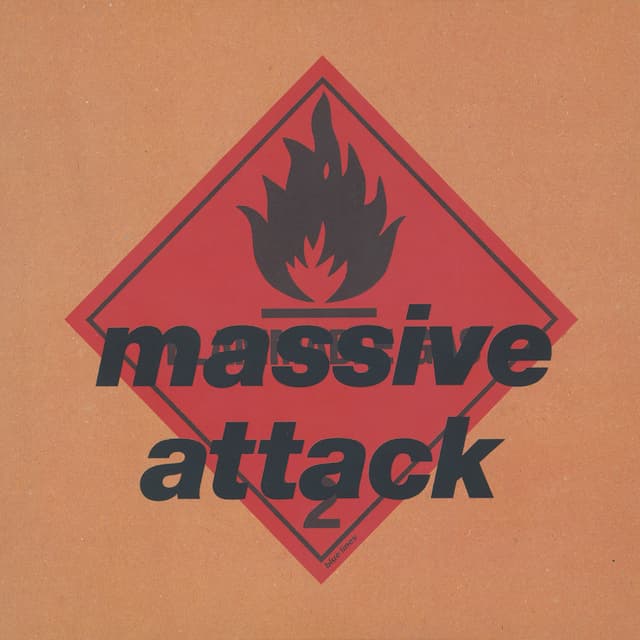
Bristol, 1991–1995: three records, one studio, and a genre named in the wrong city
Massive Attack, Portishead and Tricky put out three landmark albums in fifty months, all from one Bristol crew that came up in the same sound system. The genre name was attached afterward by a London magazine, about a record made in California. A field guide to how this happened.
By Gabin Fay
Three records came out of one Bristol crew in fifty months. Massive Attack's Blue Lines on April 8, 1991. Portishead's Dummy on August 22, 1994. Tricky's Maxinquaye on February 20, 1995. Two of them were partly recorded in the same studio. All three principals came up through the same sound system. By the time the third dropped, the British music press had decided to call this thing "trip-hop" — a term coined the previous June, in a London magazine, about a record made in California by an American DJ on a London label. Nobody in the Bristol scene used the word. Several of them publicly hated it. The name stuck anyway, because the actual common genealogy didn't have one.
Below: the city, the sound system, the studio, the three records, and the misnamed genre.
→ Bristol, 1991–1995 — the full reference playlist on Spotify (25 tracks, generated by Playgen)
The city
Bristol in the late 1970s was a post-industrial port with the wrong kind of history. Eighteenth-century Bristol had been the second city of the British slave trade, and the names on the Wills tobacco warehouses, the Colston bronzes, and the Georgian terraces of Clifton were the names of men whose money came out of that traffic. By the 1970s the docks had moved downstream, the tobacco bonded warehouses around Stokes Croft were emptying, and the Black community concentrated in St Paul's, half a mile north of the city centre, was being policed under the Sus laws — a 1824 vagrancy statute that allowed officers to stop and arrest anyone they considered "suspected persons", used disproportionately against young Black men.
On April 2, 1980, Avon and Somerset Police raided the Black and White Café on Grosvenor Road, the Caribbean café at the centre of St Paul's social life. The raid escalated; by evening a crowd of around two thousand had pushed the police out of the neighbourhood, set fire to a bank and a post office, damaged twelve police vehicles, and held the four streets around the café as a no-go zone for several hours. 130 people were arrested. Sixteen were charged with riot. None were convicted: every prosecution was either dropped, acquitted, or ended in a hung jury. The 1980 St Paul's riot is now read as the opening event of the wave that ran through Brixton (April 1981), Toxteth and Moss Side (July 1981), and Handsworth (1985).
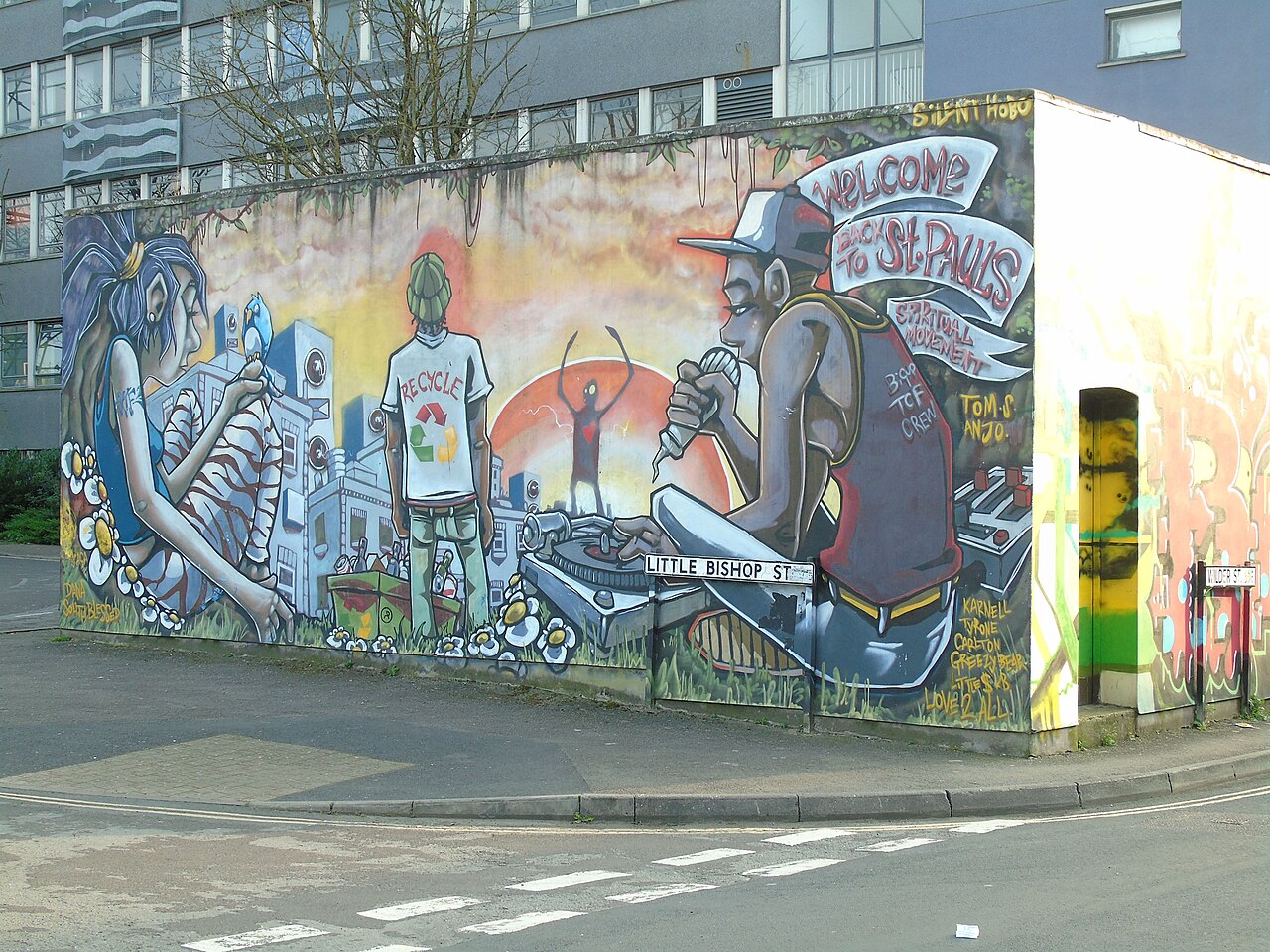
Inside St Paul's, the cultural infrastructure that mattered was Jamaican: imported reggae and dub records, mobile rigs powerful enough to be heard at street level, and a rotating cast of DJs and MCs trained on Kingston-style toasting. The neighbourhood ran sound system parties out of basements, community centres, and the disused church crypt at St Barnabas. The kids who would later make the three records were teenagers in this scene.
The Wild Bunch (1982–1987)
The Wild Bunch was a sound system, not a band. It started in 1982 with two DJs — Grantley "Daddy G" Marshall and Miles "DJ Milo" Johnson — and grew into a loose collective whose membership over five years included Robert "3D" Del Naja (a graffiti writer who'd come up tagging the Stokes Croft warehouses), Andrew "Mushroom" Vowles (a record collector), and producer Nellee Hooper. Adrian "Tricky" Thaws, then a teenager from Knowle West, orbited the crew without being a full member — he started writing rhymes after seeing the Wild Bunch play.
What made the Wild Bunch distinct from a regular hip-hop sound system was the genre breadth. Daddy G and Milo would mix early electro and West Coast hip-hop with Studio One reggae, Bristol-area post-punk, Northern Soul ballads, and slowed-down dub plates. The trick — slowing rhythms, layering ambient atmosphere over breakbeats, picking samples for melancholy rather than aggression — became the template. Bristol journalists later called it "the Bristol sound" before any of the bands existed.
The Wild Bunch dissolved gradually around 1987. On New Year's Eve 1987 they played their last major event, a sound clash with London's Soul II Soul at the St Barnabas crypt. After it, Hooper moved to London, joined Soul II Soul, and went on to produce Madonna, Björk, U2, and No Doubt. Del Naja, Daddy G, and Mushroom stayed in Bristol and started calling themselves Massive Attack.
The pre-history: Smith & Mighty (1988)
Before Blue Lines there was Smith & Mighty. Rob Smith and Ray Mighty had been in a Bristol post-punk-funk group called Sweat; in 1988 they launched their own label, Three Stripe Records, out of a council flat on Ashley Road, half a mile from the Black and White Café. Their first single was a four-track 12" titled Anyone — a dub-and-breakbeat reworking of Bacharach and David's "Anyone Who Had a Heart", with vocals by Jackie Jackson, that took a 1963 American pop song, slowed it to about 80 BPM, drowned the strings in reverb, and dropped a hip-hop break under the chorus. They followed it the same year with a similar treatment of "Walk On By".
This is the recipe. Take a melancholy soul or pop standard with a recognisable string arrangement. Slow it down. Add a heavy boom-bap drum loop. Treat the vocal as another sample to be processed rather than as the centre of the song. Smith & Mighty did this in 1988, three years before Blue Lines, on records that sold a few thousand copies regionally. They also produced Massive Attack's first single, "Any Love" (1988), in the same flat.
The 1988 Anyone / Walk On By singles are the closest thing the Bristol scene has to a year zero. Massive Attack and Portishead were both, audibly, working out implications of records that already existed.
The first record: Blue Lines (April 8, 1991)
Massive Attack signed to Virgin's Circa imprint in 1990 and started recording at Coach House Studios in Clifton, with co-producer Jonny Dollar. The album's guest vocalists were Shara Nelson (a London singer they'd worked with on early Wild Bunch material), Horace Andy (the Studio One reggae singer who'd recorded "Skylarking" in 1972 and was now living in London), and Tricky (still essentially a teenager hanging around the studio, writing rhymes in notebooks).
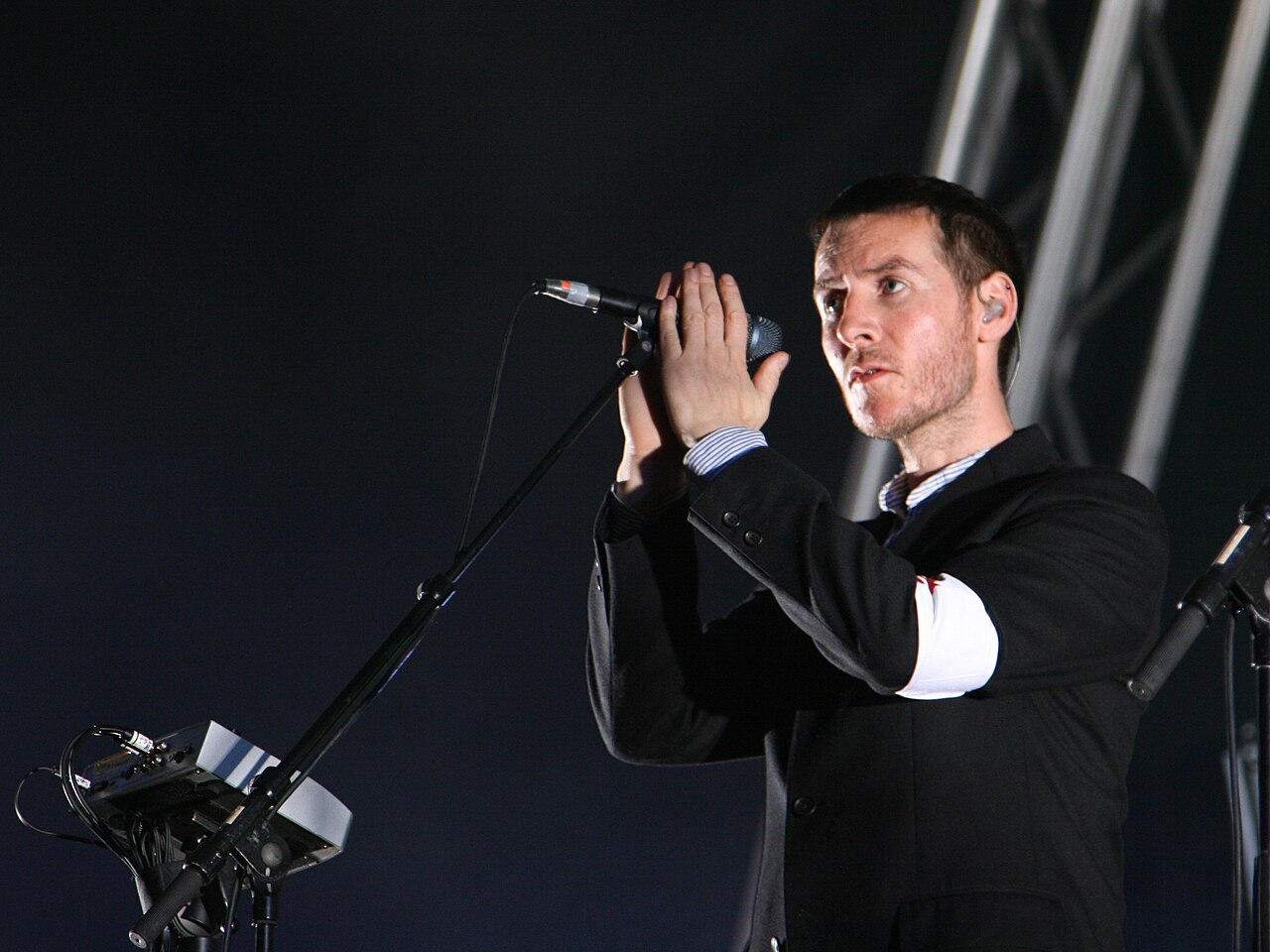
The first single, "Daydreaming", came out in October 1990. The second, "Unfinished Sympathy", was released on February 11, 1991 — and it was credited not to Massive Attack but to Massive. The Gulf War had started January 17, 1991. Circa's marketing department warned the band that the BBC would refuse to playlist a single by anyone called "Attack" while British and American troops were bombing Baghdad, and pushed for a name change. The band agreed reluctantly. "Unfinished Sympathy" peaked at UK #13 on March 10, 1991; the Gulf War had ended February 28; by the time Blue Lines came out a month later, they were Massive Attack again. The "Massive" credit on the original 7" sleeve is the artefact.
Blue Lines itself is the record. "Safe From Harm" opens with Shara Nelson over a 1973 Billy Cobham drum break. "Five Man Army" trades verses between Daddy G, 3D, Tricky, and Horace Andy — the Bristol-London-Kingston axis in audible form. "Hymn of the Big Wheel", the closer, gives Andy a full lead and lets the song breathe for almost six minutes. The album's title track, "Be Thankful for What You've Got", samples William DeVaughn's 1974 single of the same name, almost note-for-note — the kind of identifiable cover-as-sample that was illegal but uncleared throughout the late-80s/early-90s sample wars.
Blue Lines peaked at UK #13. It did not chart in the US until reissue. The critical consensus that it was the foundational record of a new genre took about three years to harden — by which point the genre had a name nobody on the record liked.
The middle record: Dummy (August 22, 1994)
While Massive Attack was finishing Blue Lines at Coach House, the studio's tape op was a 19-year-old engineer named Geoff Barrow. He was not a member of Massive Attack and didn't appear on the credits, but he was in the room: he watched the record being made, took notes on the production approach, and absorbed the sample-and-slow-it-down workflow at first hand.
Barrow had grown up in Portishead — a small port town on the Severn estuary, twelve miles west of Bristol, named after a different Portis harbour. He kept the town's name when he formed his band there in 1991 with Beth Gibbons, a Devon singer he'd met on a UK government job training scheme, and Adrian Utley, a jazz guitarist about a decade older than Barrow who'd played with Big John Patton.
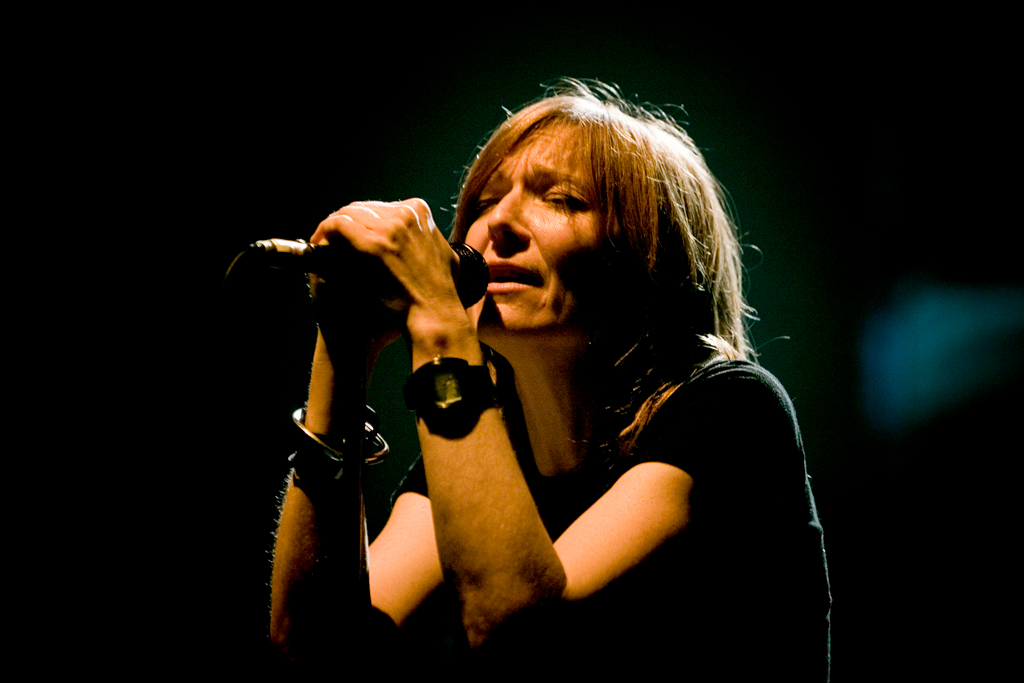
Dummy was recorded at Coach House Studios and at State of Art, Barrow's own room, between 1993 and 1994. Its sample lineage is more conservatory than Blue Lines — Barrow leaned hard into spy soundtracks and 60s jazz instead of soul. "Sour Times" samples Lalo Schifrin's "The Danube Incident" from the 1968 Mannix TV soundtrack. "Strangers" loops Weather Report. "Wandering Star" sits on a War break. The opener, "Mysterons", uses a theremin part Utley played live through a fuzz pedal — Portishead, more than the other two, played their samples on instruments and then resampled themselves, blurring the line.
The album's centrepiece is "Glory Box", built on a six-bar loop from Isaac Hayes's "Ike's Rap II" (from his 1971 album Black Moses) under a Beth Gibbons vocal that explicitly inverted the standard Hayes-style male-pleading rap into a woman demanding to be treated as a woman. The same sample, used independently and almost simultaneously by Tricky on the next record, became the connective tissue that made the Bristol cluster legible as a unit even when its members weren't speaking to each other.
Dummy peaked at UK #2. On September 11, 1995, it won the Mercury Music Prize, beating PJ Harvey's To Bring You My Love, Oasis's Definitely Maybe, and the field. By the time of the award, Barrow was telling interviewers he found the term "trip-hop" "embarrassing" and refused to use it.
The third record: Maxinquaye (February 20, 1995)
Tricky had been on Blue Lines. He had also written verses for what would become Massive Attack's second album — work that surfaced on Protection (September 1994), most visibly on "Karmacoma", a Tricky-3D duet that's recognisably the bridge between the two albums he was on. By 1993 he'd quit the group, citing creative claustrophobia: 3D was the de facto principal lyricist, and Tricky wanted his own room.
He met Martina Topley-Bird outside his flat in 1990 or 1991; she was 15, a student at Clifton College, and had no recording experience. He had her sing his lyrics back to him, often in flat unaffected delivery as if reading a shopping list, and discovered that the disjunction between his own paranoid mumble and her teenage neutrality was the sound he'd been looking for. They cut "Aftermath" almost immediately and shelved it for three years. Maxinquaye itself was recorded across 1993–1994, mostly in London, with co-producer Mark Saunders. The title is from his mother, Maxine Quaye, who had killed herself when Tricky was four; he assembled it as Maxin + Quaye.
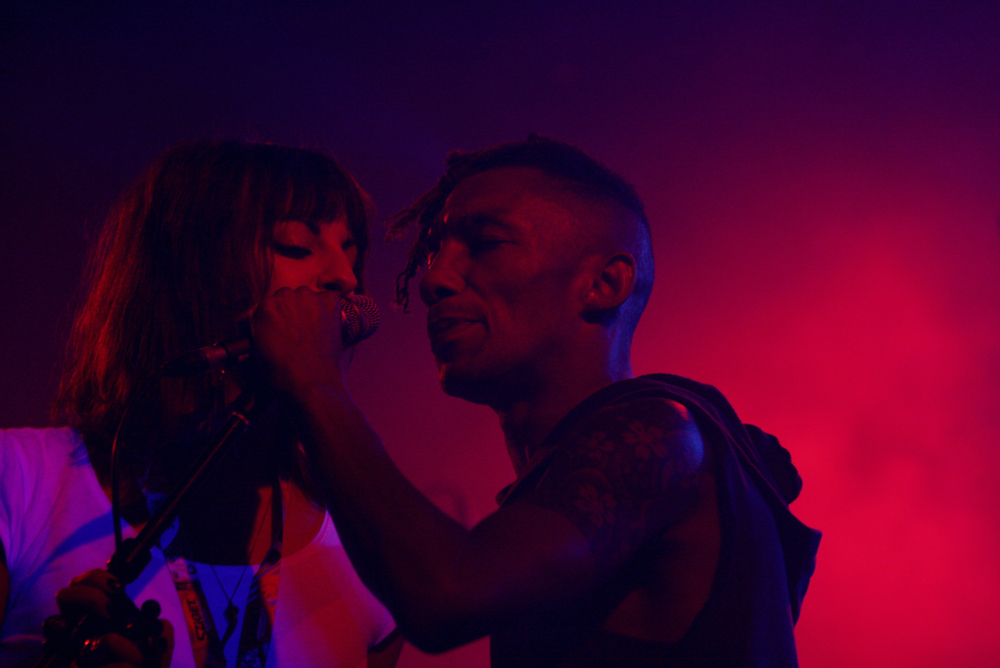
Three things on Maxinquaye are load-bearing for the Bristol-cluster argument:
- "Hell Is Round the Corner" is built on the same Isaac Hayes "Ike's Rap II" loop as Portishead's "Glory Box". Tricky and Barrow had no contact and didn't know about each other's work; both were trawling the same record collections in the same year. Tricky has said in interviews he heard Dummy after he'd already cut his version, considered scrapping his, and decided against it. Both shipped within six months of each other.
- "Black Steel" is a cover of Public Enemy's "Black Steel in the Hour of Chaos" (1988), but rebuilt as a Sonic-Youth-style guitar dirge with Topley-Bird singing Chuck D's verses about prison and the draft. It's the most aggressive thing on any of the three Bristol records and the one most often cited by critics who argue the "trip-hop" label flattened important differences.
- "Aftermath", the album's first single, was recorded in 1991 — the same year as Blue Lines — and shelved by Tricky for three years. The Bristol records were not a sequence. They were three drafts of the same idea, all started around 1990–91, that took different times to ship.
The other Maxinquaye tracks the playlist preserves — "Ponderosa", "Overcome", and "Pumpkin" — sit between paranoia and lullaby, with Topley-Bird's vocal carrying nearly all of them. The album peaked at UK #3, sold over 100,000 copies inside its first months, and was named the year's best album by NME, Melody Maker, and The Wire.
The genre name (June 1994, Mixmag, the wrong record)
The term "trip-hop" first appeared in print in June 1994, in Mixmag, in a short column by Andy Pemberton about an instrumental 12" called "In/Flux" by DJ Shadow (Josh Davis), an American producer based in California, released on the London label Mo' Wax (run by James Lavelle, also from London, not Bristol). Pemberton wrote that the record's mix of slow breakbeats, spoken-word samples, eerie melody and unexpected tempo shifts gave the listener "the impression they were on a musical trip." He proposed the term as a London-club genre tag for a kind of instrumental hip-hop being played at Lavelle's club nights.
Pemberton was not writing about Massive Attack, Portishead, or Tricky. None of them were on Mo' Wax. The Bristol records existed in a different ecosystem — major-label LPs with vocalists, distinctly soul-and-reggae rather than psychedelic-and-instrumental. But the genre name was elastic, Dummy came out two months after Pemberton's column and pulled the term toward itself, and by the time Maxinquaye shipped in February 1995 the British press had decided "trip-hop" meant Bristol.
The Bristol artists rejected this almost immediately. 3D from Massive Attack told NME the term was "press hype." Geoff Barrow said it was "embarrassing." Tricky in 1995 said: "I'm not trip-hop. Trip-hop is your problem." The genre name had been imposed on a scene that didn't ask for it, by a magazine in a different city, about a record made by an American on a London label. The DJ Shadow / Mo' Wax cluster (Endtroducing..... shipped in November 1996) is what Pemberton was naming. The Bristol records ended up under the same umbrella because British music journalism in the mid-90s had fewer terms than it had records.
What made it Bristol
The deeper genealogy that the genre name papered over runs through Mark Stewart and the Pop Group (the post-punk band who'd been recording in Bristol since 1979, fusing dub, free jazz, and political agitprop) and his solo records on Adrian Sherwood's On-U Sound label, like "Hypnotised". Stewart's collision of dub bass, found-vocal samples, and dread atmosphere is sitting underneath every minute of Blue Lines; 3D has cited him repeatedly as the precondition. The whole Bristol cluster runs through the same fifty-square-mile circuit: a sound system culture rooted in St Paul's, a label scene at Three Stripe and Wild Bunch Records, a single working studio (Coach House) where engineers and artists rotated, and a small enough city that everyone heard everyone else's tapes before they were finished.
After
The dispersal happened almost on schedule. Massive Attack's Mezzanine (April 1998) was a darker, guitar-heavier record made in conditions of internal fracture — Mushroom left during the sessions; Tricky was no longer collaborating; Horace Andy returned. Portishead made one more album, the self-titled Portishead (September 1997), then went silent for eleven years before Third (April 2008). Tricky kept releasing records continuously but never matched Maxinquaye's critical status; his second album Pre-Millennium Tension (October 1996) is the one his fans rate highest. Coach House Studios is still operating in Clifton.
The fifty months between April 1991 and February 1995 are the only period in which the three records, the three principals, and the city itself are all in the same frame. Everything before is prologue and everything after is dispersal. The genre name, which everyone in the room rejected, is what most listeners now use to find the records. It is also what brought you here.
If you want to hear all twenty-five tracks in order — sound-system precursors, the three flagship LPs, the sample sources, the bridge to the Bristol post-punk underneath — the Bristol, 1991–1995 playlist is the assembled set.
— Click any song link to play it inline. Right-click to open in Spotify.