Tropicália, 1967–1968: how a fourteen-month movement got its founders arrested
Tropicália lasted barely a year and a half before the Brazilian junta jailed its two architects. A field guide to the records, the cast, the arrests, and the long afterlife — with every song traced.
By Gabin Fay
Tropicália is a movement most non-Brazilians have heard of without being able to name three songs in it. That's a real loss, because the entire thing is compact: it crystallized in October 1967, peaked with one album in mid-1968, and was effectively decapitated on December 27, 1968, when the military regime arrested its two architects. Eighteen months, one manifesto LP, two exiles, and a long second life as the secret influence behind half of indie rock.
Below: the records, the people, the politics, and the playlist.
→ Tropicália Echoes — the full reference playlist on Spotify (27 tracks, generated by Playgen)
The setup
Brazilian popular music in the mid-1960s was politically loud and sonically conservative. The música popular brasileira (MPB) protest scene treated the acoustic guitar as ideologically pure and the electric guitar as a Yankee import. Bossa nova — João Gilberto's 1958 Chega de Saudade the canonical year-zero — had already gone international through Stan Getz and Astrud Gilberto, but younger Brazilian musicians felt it had hardened into a tasteful export product.
Two friends from Salvador, Bahia — Caetano Veloso and Gilberto Gil, both born in 1942 — wanted out of the binary. They had bossa nova chord literacy, samba rhythm in their bones, and a pile of Beatles, Hendrix, and Stockhausen records. The "cannibalist" framework they reached for was already 40 years old: Oswald de Andrade's 1928 Manifesto Antropófago, which argued that Brazilian culture should eat foreign influence and digest it into something local rather than refuse it on nationalist grounds.
The visual half of the name came from Hélio Oiticica, a Rio de Janeiro artist whose immersive installation Tropicália — a wooden labyrinth with sand, tropical plants, live macaws, and a TV set at the exit — was shown at the Nova Objetividade Brasileira exhibition at MAM Rio from April 6–30, 1967. Caetano lifted the word at the suggestion of filmmaker Luís Carlos Barreto, used it as a song title, and a movement now had a label.
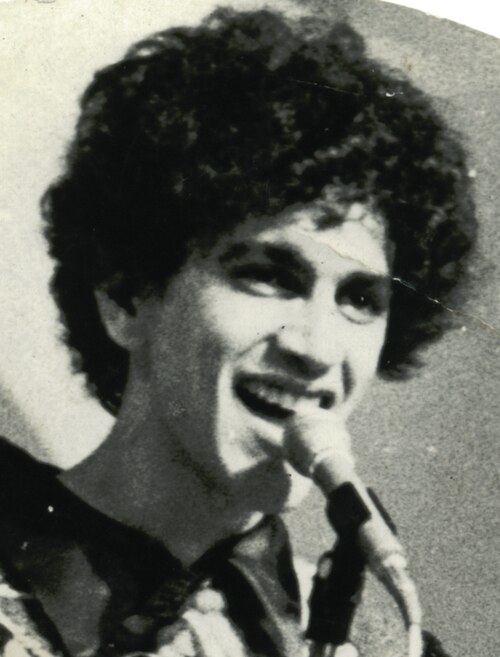 Caetano Veloso, late 1960s. Photo from the Correio da Manhã archive, via Wikimedia Commons.
The 1967 song festivals
Brazilian TV in the late 60s ran nationally televised song festivals as a yearly cultural event. The 1967 Festival da Record in São Paulo is the symbolic Year Zero. Caetano performed Alegria, Alegria backed by an electric rock band; Gil performed Domingo no Parque backed by Os Mutantes. Both songs placed in the top finalists; both were booed by the acoustic-guitar wing of the audience for the rock instrumentation. The booing was the point. It told everyone watching that there were now sides.
A year later, at the September 1968 III Festival Internacional da Canção at Rio's Catholic University, Caetano premiered É Proibido Proibir (a translation of the Paris '68 graffiti slogan, "it is forbidden to forbid"). The audience didn't just boo — they pelted the performers with fruit, vegetables, eggs, and balled-up paper. Caetano delivered a now-canonical on-stage outburst — "Vocês não estão entendendo nada!" ("You don't understand anything!") — telling the audience they were the conservatives and he was the actual avant-garde. The clip is the single most-circulated Tropicália artifact.
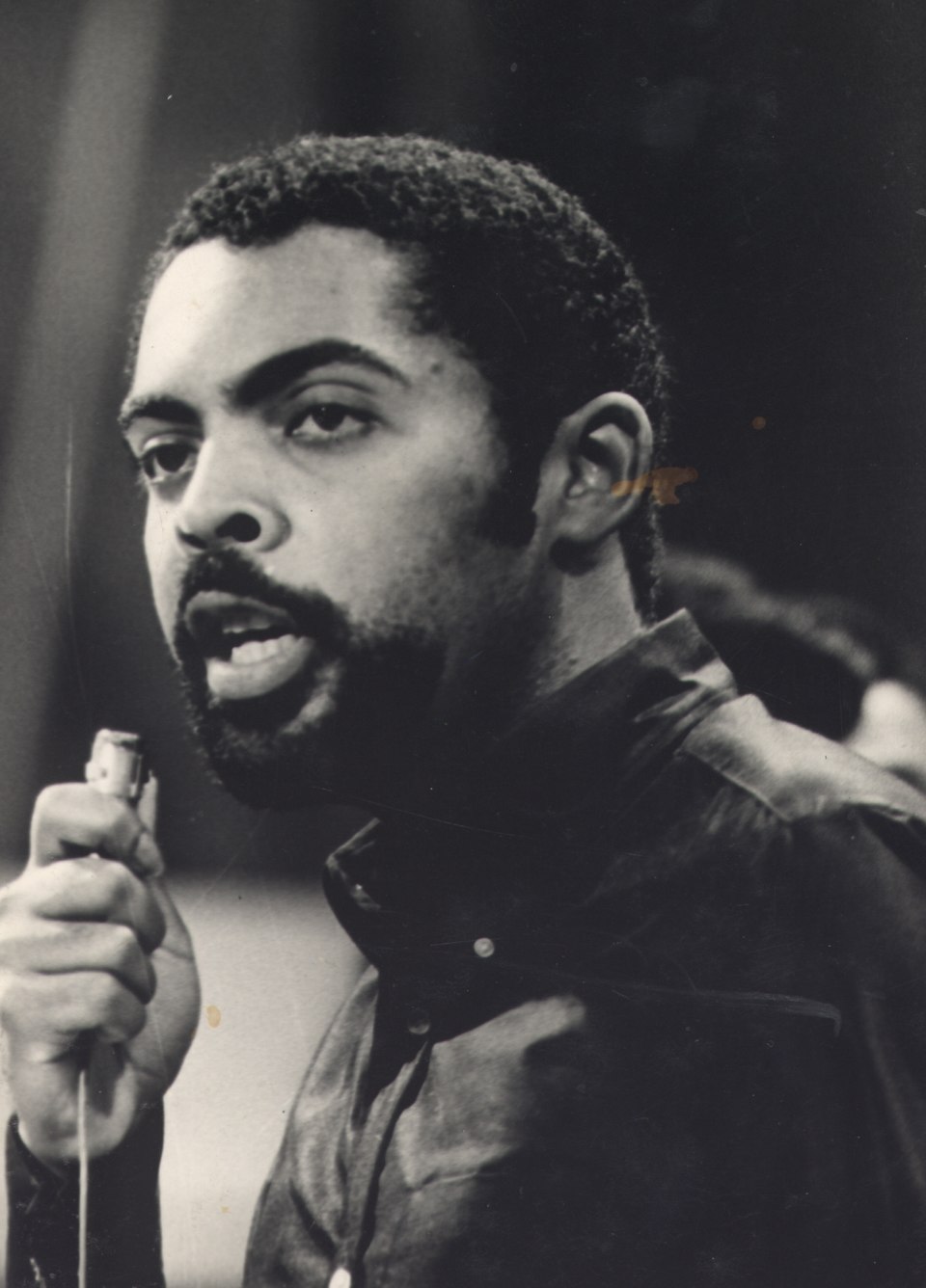 Gilberto Gil, late 1960s. Via Wikimedia Commons.
The cast
- Caetano Veloso — Bahia. Lyricist, singer, the movement's intellectual.
- Gilberto Gil — Bahia. Caetano's closer collaborator; later (1990s onward) Brazil's Minister of Culture under Lula.
- Os Mutantes — São Paulo. Rita Lee (vocals), Arnaldo Baptista (bass, vocals), Sérgio Dias (guitar). The band most committed to the rock-and-tape-collage side. Sérgio and Arnaldo are brothers.
- Tom Zé — Bahia. Older than the others (born 1936), most experimental, most concerned with concrete music and conceptual lyric games.
- Gal Costa — Bahia. Lead vocalist on Caetano's compositions and on her own records.
- Nara Leão — bossa nova singer; her participation lent older-guard legitimacy.
- Rogério Duprat — classically trained arranger. The brass-and-strings architecture of every Tropicália record passes through him. He is reasonably called the George Martin of the movement.
- Torquato Neto and José Carlos Capinan — lyricists/poets credited on multiple tracks.
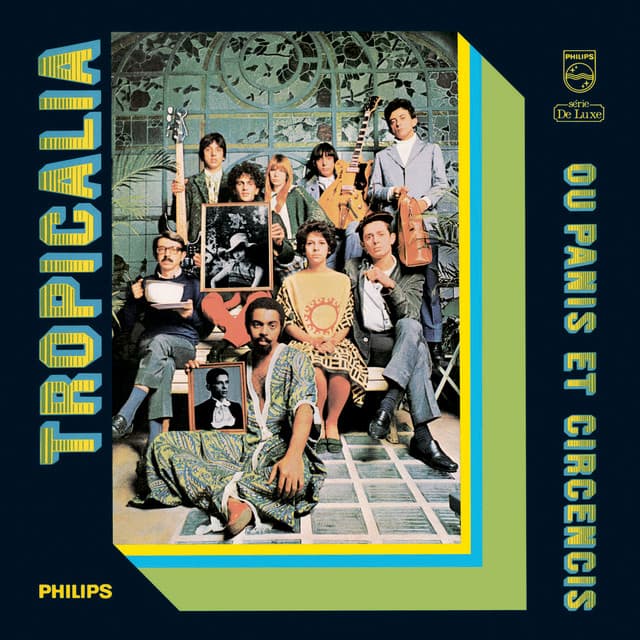
The manifesto LP: Tropicália: ou Panis et Circensis (Philips, 1968)
Eight singers, one band, one arranger, one record. The cover photograph poses the principals together as a family portrait — the visual debt to the Sgt. Pepper's cover is acknowledged and unsubtle. It is the only album that "Tropicália the movement" ever shipped under its own name.
What's actually on it (selected, not exhaustive):
- Misérere Nóbis — Gilberto Gil. Liturgical Latin chorus over electric arrangement.
- Coração Materno — Caetano Veloso, covering a Vicente Celestino melodrama, sung straight, with Duprat strings underneath. The "cannibalism" thesis demonstrated literally.
- Panis et Circenses — Os Mutantes. The track most often used to teach what Tropicália sounds like: bossa-nova melody, fuzz guitar, and a structural prank where the band literally "stops eating" mid-song and the recording goes silent before resuming.
- Lindonéia — Nara Leão. Composed by Gil and Caetano, a small-life portrait of a working-class woman.
- Parque Industrial — Tom Zé. An advertising-jingle parody of national consumer pride that doubles as a critique of import-substitution-industrialization rhetoric.
- Geléia Geral — Gilberto Gil with lyrics by Torquato Neto. The "general jelly of Brazil" — an ironic listing of national clichés that became the movement's most-quoted lyric.
- Baby — sung by Gal Costa and Caetano. The closest the album gets to a pop single.
- Bat Macumba — Caetano + Gil. Lyric is a single phonetic word ("Bat Macumba ê ê, Bat Macumba oba") visually shaped on the page like a concrete-poetry calligram.
Beyond this LP, the same year (1968) produced Caetano's self-titled solo album, Gilberto Gil's self-titled, Gal Costa's Gal Costa (1969), and Os Mutantes' debut. Those four records plus Panis et Circensis are the discography. Add Tom Zé's Tom Zé (1968) for the experimental wing.
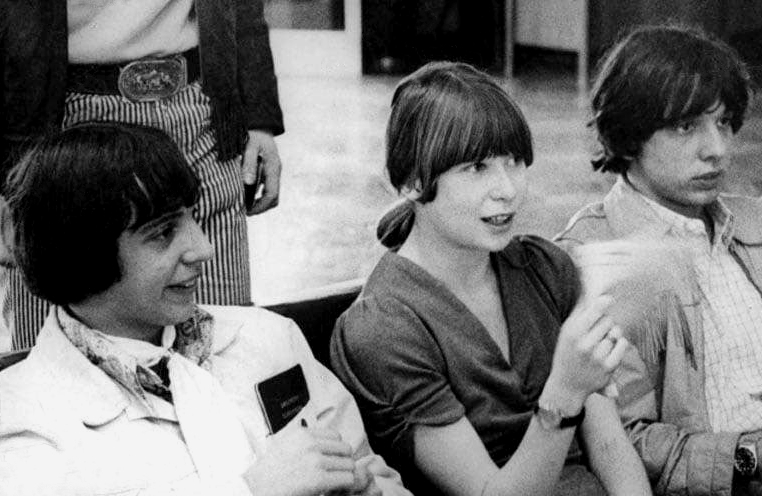 Os Mutantes in 1971: Rita Lee, Arnaldo Baptista, Sérgio Dias. Restored archival photo via Wikimedia Commons.
What it actually sounds like
Specifically, three things at once that hadn't been at once before in Brazilian recording:
- Bossa-nova harmony (the Jobim/João Gilberto chord vocabulary — 9ths, 13ths, chromatic descending lines). You can hear this carrying Baby and most of Caetano's solo writing.
- Fuzz, distortion, tape edits — Beatles Revolver-and-Sgt.-Pepper-era studio thinking, Stockhausen-influenced concrete passages. Bat Macumba uses backwards tape; Panis et Circenses uses an abrupt mid-song cut.
- Duprat's brass and strings — not as ornament but as a structural counter-voice. Compare the brass on Geléia Geral to a Burt Bacharach arrangement; it's a similar density of voice-leading, different register.
Os Mutantes were the most Beatles-literal of the cohort. A Minha Menina (written by Jorge Ben, who guested on the recording on vocals and acoustic guitar) on their 1968 self-titled is the cleanest single-song demonstration of the band's full sound: Rita Lee's voice over Sérgio's fuzz lead. 2001 (from their 1969 Mutantes) and Ando Meio Desligado (from 1970's A Divina Comédia ou Ando Meio Desligado) extend the same vocabulary into harder psychedelia.
Tom Zé sat to the side. São São Paulo and Parque Industrial (both 1968) treat the song as a kind of essay form. He'd push this further on later records — by the 1970s he was writing pieces with explanatory liner notes that read like art-criticism abstracts.
What spooked the junta
Brazil had been under a military regime since the 1964 coup. December 13, 1968, the regime issued AI-5 (Ato Institucional Número Cinco), the harshest of its institutional acts: it suspended habeas corpus, allowed indefinite detention, and centralized censorship.
Two weeks later — December 27, 1968 — Caetano and Gil were arrested in São Paulo, transferred to Rio, and held in solitary. No formal charges were ever filed. They were imprisoned for roughly three months, then placed under house arrest for several more, then made to perform a fundraiser concert in Salvador to pay for their own departure, before being exiled to London, where they lived 1969–1972.
The official reason for the arrest has never been clean. It wasn't a single song. The regime's read of Tropicália as a posture — long hair, electric guitars, irreverence toward national symbols, É Proibido Proibir — was the actual indictment. The movement also had the misfortune of sharing rhetorical airspace with the actual armed left of 1968, which the regime was preparing to crush in earnest the following year.
Tropicália was, functionally, over the day Caetano and Gil flew to Heathrow. The cohort kept making records — Os Mutantes through 1974, Tom Zé through the 70s — but the movement-with-a-capital-M never reassembled.
The exile records
In London, Caetano wrote London London (from his 1971 self-titled English-language album) — a flat, lonely English-language meditation that is the cleanest statement of exile in his catalog. Gil's London record (the 1971 self-titled with the photo of him sitting on a fence) is more upbeat; he came back from England with a deeper interest in reggae and West African music that surfaces clearly on his mid-70s solo records.
When they returned in 1972, the Tropicália moment was historical. Their work afterward absorbed back into MPB and went mainstream — Caetano's Transa (1972), Gil's Expresso 2222 (1972). Different category of record.
The afterlife: who picked it up
This is where Tropicália gets interesting for non-Brazilian listeners, because the revival was almost entirely English-language.
- Tom Zé: career flatlined in the 80s — by the end of the decade he had reportedly stepped back from music almost entirely. David Byrne discovered Estudando o Samba (1976), made Zé the first artist signed to his Luaka Bop label, and issued Brazil Classics 4: The Best of Tom Zé — Massive Hits (1990). The reissue restarted Zé's career; he's been touring and recording continuously since.
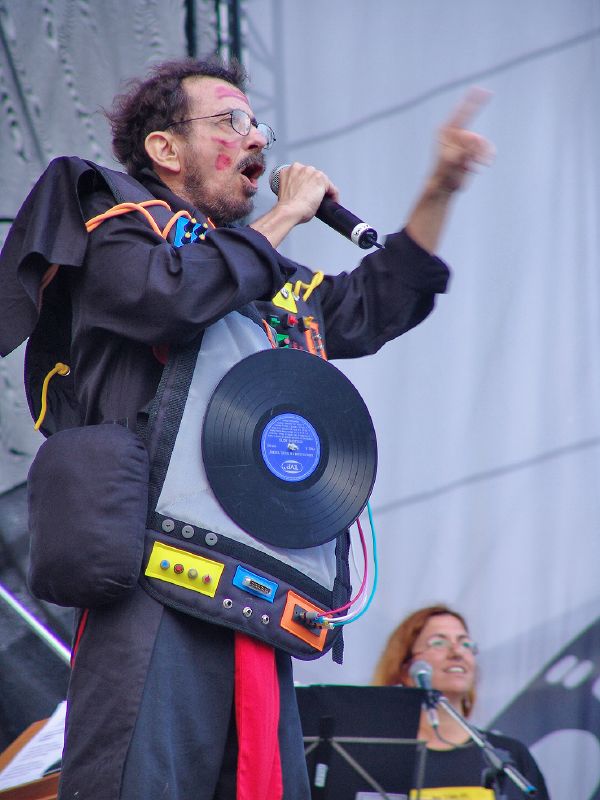 Tom Zé. Via Wikimedia Commons.
- Os Mutantes: dissolved 1978, with Arnaldo Baptista hospitalized for mental health issues. Kurt Cobain wrote a fan letter inviting them to open for Nirvana in 1993; the reunion didn't happen, but the citation circulated and made the band's records suddenly findable in American record stores. The band finally reunited on May 22, 2006, at the Tropicália exhibition at London's Barbican — Sérgio Dias and Arnaldo Baptista returning, Rita Lee declining the invitation. Subsequent shows in the US included a Los Angeles date with the Flaming Lips.
- Beck named a song Tropicalia (track 6 on Mutations, November 1998), co-produced with Nigel Godrich.
- of Montreal, Devendra Banhart, and Stereolab all cite the cohort as direct influence. Stereolab's interest in Brazilian arrangement on Sound-Dust (2001) routes specifically through Duprat.
- David Byrne kept reissuing — Brazil Classics 1: Beleza Tropical (1989) compiled Caetano, Gil, Gal Costa, Maria Bethânia, Chico Buarque, and Jorge Ben for an English-language audience. That compilation is, for a lot of US/UK listeners over 35, the door they walked through.
Things to listen for, with timestamps in mind
- The Sgt. Pepper mid-song "death" gag: Panis et Circenses, ~2:00.
- Backwards tape: Bat Macumba, intro.
- Duprat's brass writing as a counter-voice rather than a pad: Geléia Geral, all of it.
- Concrete-music sound design over a samba pulse: Tom Zé, Parque Industrial.
- The bossa-nova-meets-fuzz-guitar core thesis: Os Mutantes, A Minha Menina.
- Caetano's stage speech: the audio of "Vocês não estão entendendo nada" is on the live recording attached to É Proibido Proibir.
The playlist
Every song hyperlinked in the body above is a Spotify track URL. They're collected, plus a handful of MPB adjacency picks the generator added on its own (Gilberto Gil's Aquele Abraço 1969, Caetano's Sampa and Tigresa, Os Mutantes' Ave, Lúcifer, Tom Zé's Augusta, Angélica e Consolação, Novos Baianos' Preta Pretinha, Jorge Ben's medley with A Minha Menina, Caetano + Gil's Desde Que O Samba É Samba, Gilberto Gil's Expresso 2222) here: