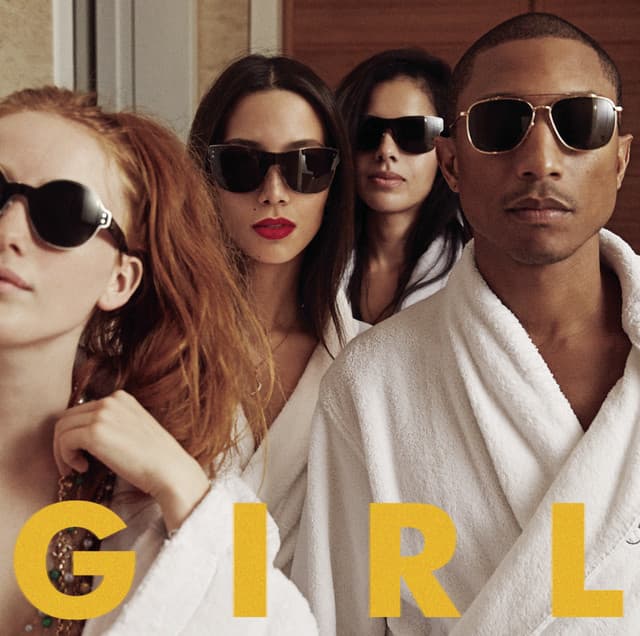
The four-count man: Pharrell Williams' hidden production discography
The Marvin-Gaye falsetto on Ed Sheeran's 'Sing'. The marching-band stomp on 'Hollaback Girl'. The hook on Kendrick's 'Alright'. A French rap track for Luc Besson's Taxi 3. The reason 'Drop It Like It's Hot' starts with that one-two-three-four. The same producer, hiding in plain sight for thirty years.
By Gabin Fay
There is a four-count vocal click — "uh-uh-uh-uh" or sometimes just a soft "one, two, three, four" — that appears at the top of a surprising number of pop songs released between 2001 and roughly 2014. It is in Snoop Dogg's "Drop It Like It's Hot". It is in Pharrell's own "Frontin'". It is in Kelis's "Milkshake". It is in Britney Spears' "I'm a Slave 4 U", in Nelly's "Hot in Herre", in Clipse's "Grindin'", in Justin Timberlake's "Señorita". Once you hear it you cannot unhear it. It is the same person, doing the same thing, for thirteen years across what looks at first like every corner of mainstream music.
That person is Pharrell Williams — and he has said, in interviews, that he never meant the four-count to become a signature. He told Okayplayer that the count was just a metronome cue to help him start the vocal on the right beat, and that sometimes he forgot to mute it before mixdown. It got left in. It got noticed. Someone made an entire Spotify playlist of every song where it appears.
That accidental tag is the visible part of an iceberg. The submerged part is a production discography so large and so stylistically promiscuous that most listeners cannot believe a single set of fingerprints connects it all. Pharrell — alone, or with his Virginia Beach high-school friend Chad Hugo as The Neptunes, or with Hugo and Shay Haley as N.E.R.D. — has co-produced or co-written roughly one out of every five hits you can hum from the early 2000s. You know the songs. You don't know they're his.
This piece is a field guide to that invisible discography: the obvious credits, the deep-cut credits, the genuinely weird ones (a French rap track scored for a Luc Besson film, an orchestral superhero suite with Hans Zimmer, the hook on a Pulitzer-winning Kendrick album), and a working theory of why the fingerprints don't add up to a face.
→ The Neptune Engine — the 40-track Spotify playlist (generated by Playgen)
1. The four-count
The four-count is not a real producer tag in the Mike WiLL / DJ Mustard sense — it is not an audio drop saying his name. It is a behavioural tag: a count-in left in the mix. Pharrell sings or speaks the count to himself to set the tempo, then forgets to take it out. It is the trace of his vocal coming in before the recorded performance — a producer accidentally signing the work he produced for someone else.
Listen for it in order and the pattern becomes clinical:
- "Lapdance" — N.E.R.D. ft. Lee Harvey & Vita (2001) — the count is unmistakable, top of the track.
- "I'm a Slave 4 U" — Britney Spears (2001) — Pharrell whispers the breath-count under Britney's first inhale. That's him, on the same song where Britney brought the snake on stage at the MTV awards.
- "Grindin'" — Clipse (2002) — the count is buried in the iconic three-element beat (kick, clap, that two-finger desk-tap).
- "Hot in Herre" — Nelly (2002) — listen at 0:03. The four-count starts the song that started a thousand frat parties.
- "Frontin'" — Pharrell ft. JAY-Z (2003) — his own track, his own four-count, sung in his own falsetto: the closest he ever came to deliberately using it as a signature.
- "Drop It Like It's Hot" — Snoop Dogg ft. Pharrell (2004) — the tongue-click. That's Pharrell. The whole song is a three-element minimalist beat (kick, finger-snap, weird descending synth) wrapped around a four-count.
- "Milkshake" — Kelis (2003) — count + Middle-Eastern hand-percussion stutter.
- "Happy" — Pharrell Williams (2013) — ten years later, on the most ubiquitous pop song of the 2010s, the four-count is still there.
When the man himself heard a YouTube compilation of all his accidental four-counts spliced back-to-back, he said in the Okayplayer interview: "I never meant to."
2. The Neptunes engine room (2000–2005)
To understand the scale of Pharrell's hidden discography, you have to understand what The Neptunes were doing between roughly 2000 and 2005. They produced — across that five-year window — somewhere north of forty Top-40 hits. Not contributed to. Not co-produced as one of six names. Produced. The list is so long that a complete Neptunes production discography on Wikipedia runs to several thousand entries.
A non-exhaustive walk through the engine room:
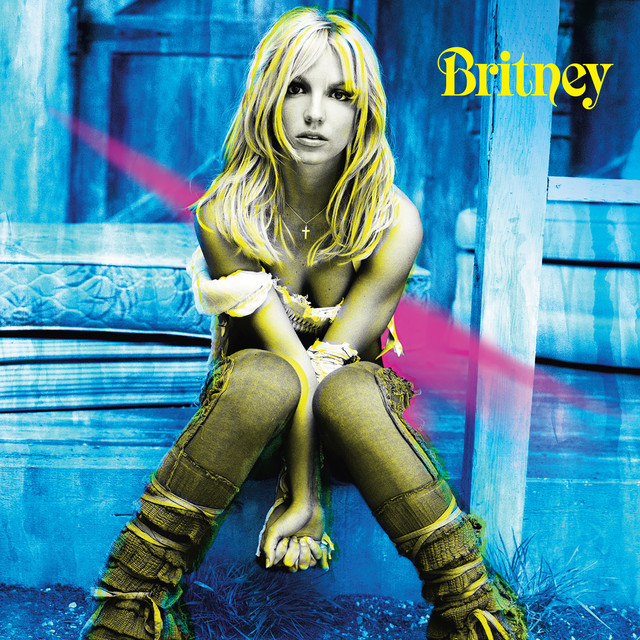
"I'm a Slave 4 U" — Britney Spears (2001). Pharrell wrote the song with Chad Hugo, produced it, and sings the lung-breath samples that pulse through the chorus. The track was originally written for Janet Jackson, who passed; Britney's team grabbed it. It became the lead single of Britney, was performed with the famous Burmese python at the 2001 VMAs, and effectively ended teen-Britney's career arc as a Disney-machine pop star. The man behind that pivot was a 28-year-old producer from Virginia Beach.
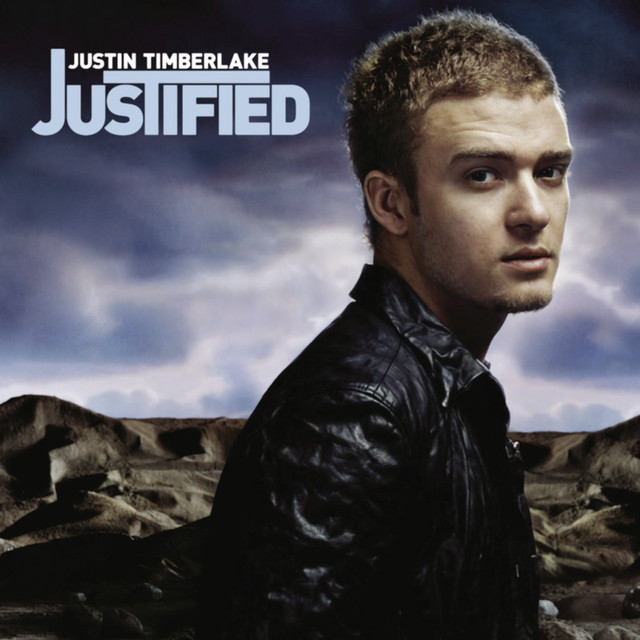
"Like I Love You" — Justin Timberlake (2002). Acoustic Spanish-flavoured guitar, a Clipse rap feature, no chorus in the traditional sense. The song was JT's first solo single. The Neptunes produced the bulk of Justified — including "Señorita" and "Rock Your Body" — and what they were really doing was teaching Justin Timberlake how to sound Black. The album sold ten million copies. By 2003, Timberlake's career was a Pharrell-produced object.
"Hot in Herre" — Nelly (2002). One of the biggest hits of the 2000s. The beat samples Chuck Brown's "Bustin' Loose" and weaponises it. The Neptunes built the entire production around two hits of the snare and a rising bass synth — and Pharrell's "uh-uh-uh-uh" count under the first verse.
"Grindin'" — Clipse (2002). The most influential minimalist beat of the 2000s — taught in production tutorials as the canonical lesson in what to leave out. Kick. Clap. A finger-tap on a school-cafeteria table. One descending synth bleep. Nothing else. The brothers Pusha T and Malice (now No Malice) rapped Virginia drug-trade narratives over it. Pharrell and Chad had built half the song from Pharrell's mouth percussion.
"Drop It Like It's Hot" — Snoop Dogg ft. Pharrell (2004). Snoop's first #1 single. The beat is even more minimal than "Grindin'" — Pharrell's tongue-click, a soft kick, one synth note. The track held the top of the Billboard Hot 100 for three weeks and effectively re-launched Snoop's commercial career a decade into it.
"Milkshake" — Kelis (2003). Pharrell wrote it. Kelis was already a Neptunes artist — "Caught Out There" from 1999 was their breakthrough together — and "Milkshake" cemented the partnership and the sound: vaguely Eastern percussion, melodic Western chorus, sex-as-product hook. The Neptunes' template, run with a different vocalist.
"Beautiful" — Snoop Dogg ft. Pharrell & Charlie Wilson (2002). Filmed in Rio. Pharrell wrote and produced it and sings half the chorus. By this point he was no longer a producer who occasionally sang; he was an artist who occasionally produced for other people.
"Pass the Courvoisier Part II" — Busta Rhymes ft. P. Diddy & Pharrell (2002). Liquor-brand placement, marching-band horns, Pharrell ad-libbing the hook. The Neptunes produced "Light Your Ass on Fire" for Busta too the following year, plus most of Busta's Genesis album.
"Hella Good" — No Doubt (2001). Yes — that No Doubt song. The dance-rock track that introduced Gwen Stefani's solo direction was a Neptunes production three years before she went fully solo. Pharrell was already designing the sound Gwen would inherit.
"Boys (Co-Ed Remix)" — Britney Spears ft. Pharrell (2002). From Austin Powers in Goldmember. Pharrell is the male voice on the song. He was Britney's go-to producer for that 2001–2002 window.
"Excuse Me Miss" — JAY-Z (2002) and "Change Clothes" from The Black Album — both Neptunes. The relationship with JAY-Z was deep enough that Pharrell co-headlined "Frontin'" with him in 2003, the closest Pharrell came to a solo career before G I R L.
"Gangsta Lovin'" — Eve ft. Alicia Keys (2002). Sampled the Eve of Destruction strings? No — Pharrell built it from the original Heatwave "Always & Forever" melody and re-pitched it. The bridge between Eve's hardness and Alicia's piano-soul was built in a Virginia Beach basement.
"Money Maker" — Ludacris ft. Pharrell (2006). Pharrell wrote it, produced it, sings the hook. Ludacris's biggest commercial single. A formal late-Neptunes piece: the squelching synth, the rap verse, the Pharrell-sung melodic chorus.
The full list of Neptunes productions for hire in that 2000–2005 window includes work for Usher, Mystikal, Ol' Dirty Bastard, LL Cool J, Foxy Brown, Fabolous, the Hives, Beanie Sigel, Mariah Carey, Common, Slim Thug, T.I., Toni Braxton, and an extraordinary number of one-off "Neptunes Remix" releases. The duo had a unified production sound that was physical — drums you could feel in your sternum, basslines that articulated like speech — and they sold it to anyone with a budget.
3. Hollaback Girl — the day Pharrell taught the world to spell bananas
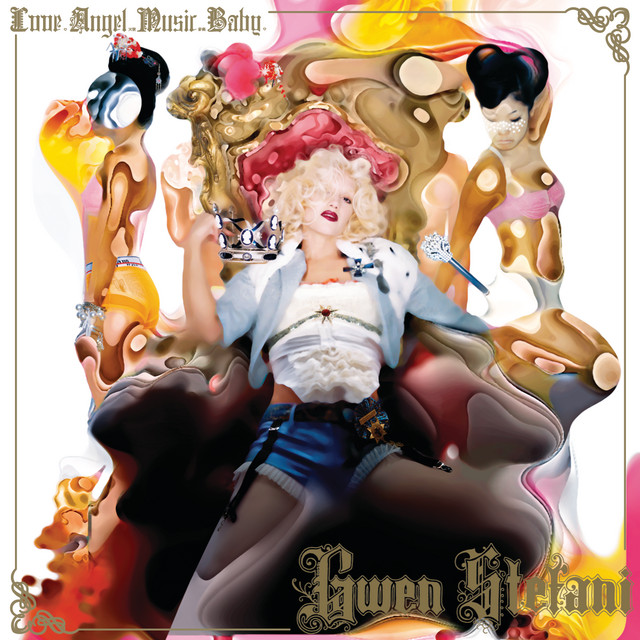
"Hollaback Girl" — Gwen Stefani (2004) was Pharrell's biggest-ever production crossover into pure pop. It was the first song in the US iTunes era to be certified for one million downloads. The "this shit is bananas — B-A-N-A-N-A-S" chant became a national meme before the word meme meant what it now means.
Stefani said in a 2025 interview that she taught the world to spell bananas because she herself was a bad speller with dyslexia and the cheer-chant was a workaround. Pharrell built the marching-band stomp around it — trombones, snare-line claps, cheerleader hand-percussion. The song's structural insight was that the backing track didn't need to be a song; it could be a high-school pep-rally cadence. Pharrell had been in his own marching band as a kid in Virginia Beach. Stefani had played piccolo in Anaheim. They built the most-downloaded song of 2005 out of a memory they happened to share.
"Wind It Up" from The Sweet Escape (2006) was the same partnership refining the same formula — Neptunes production, vaguely-Mediterranean accordion sample, Gwen yodelling.
4. The French detour: TAXI 3 (2003)
This is the credit even most Pharrell completists do not know about.
In 2003, Luc Besson produced TAXI 3, the third in the French action-comedy franchise about a hyper-fast Marseilles taxi driver. The soundtrack — assembled by the French production duo Kore & Skalp — was almost entirely French rap and R&B: Booba, Diam's, 113, Doc Gynéco, Rohff, Corneille, the standard Île-de-France 2003 lineup. Track 17 is by N.E.R.D. Track 6 is by Pharrell Williams featuring Rohff — a Comoros-born French rapper from Vitry-sur-Seine — on a song called "Where's Yours At?", produced by The Neptunes.
You will not find "Where's Yours At?" on Spotify. It exists only on the TAXI 3 (Bande Originale du Film) CD, never re-issued, never on a Neptunes compilation. It is up on YouTube in a handful of low-fidelity uploads:
- ▶ Pharrell Williams x Rohff — "Where's Yours At?" (2003, OST Taxi 3)
- ▶ N.E.R.D. — "Find My Way" (track 17, OST Taxi 3) — also released as a hidden track on the US edition of N.E.R.D.'s Fly Or Die under the title "Chariot of Fire / Find My Way"
What was Pharrell doing on a Luc Besson franchise soundtrack? The honest answer is: nothing more complicated than getting paid for a cool job. Besson's Europacorp had a relationship with US hip-hop through the Taxi series (the previous film, TAXI 2, had IAM and Akhenaton on its OST) and Pharrell — at the absolute peak of his market value — was approachable for a one-off feature. Rohff was the marquee French name on the album. Putting them on the same track was a curatorial flex by Kore & Skalp.
The song itself is an artifact of pure 2003 Neptunes-craft applied to a French commercial context: the breath-percussion, the descending synth, Pharrell's falsetto chorus in English, Rohff's verse in French about driving fast through Paris. A snapshot of how globalised The Neptunes' sound had become — they were doing the same beat for Snoop Dogg, Britney Spears, and a French taxi-action sequel, all in the same calendar year.
5. The Ed Sheeran pivot: "Sing" and the Marvin Gaye debt (2014)
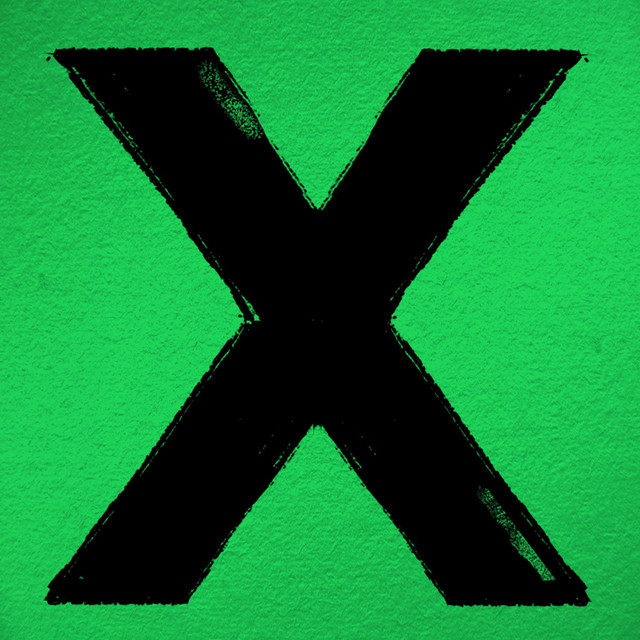
By 2013, Ed Sheeran had released one moderately successful album (+, 2011) and was best known as a busker-turned-folk-pop performer with a loop pedal. His second album, x, needed to reposition him as a global pop artist. Sheeran flew to LA to do his first-ever session with Pharrell.
The output was "Sing" — and listening to it now, almost the only thing of Ed Sheeran's previous sound that survives is the acoustic guitar. The rest is a Neptunes production: the four-count, the Pharrell breath-claps, Pharrell's uncredited falsetto in the background of the chorus, the rubbery wah-wah guitar straight out of Marvin Gaye's "Got to Give It Up". Sheeran is essentially singing in Pharrell's headvoice all the way through.
The song debuted at #1 in the UK, reached #13 in the US, and made x the global blockbuster it became. Sheeran credited Pharrell in subsequent interviews for "pushing me to do the best thing possible" — the standard Pharrell-produces-you experience that JT had had in 2002 and Snoop in 2004. Pharrell would push the artist into a higher register, sing the part himself first to demonstrate, then leave the studio and let the artist try to match it.
The Pharrell vocal influence on "Sing" is so strong that it later became a complication in the Ed-Sheeran-vs.-Marvin-Gaye-estate lawsuits over "Thinking Out Loud" — the question of where does Sheeran's Marvin-Gaye DNA come from has two correct answers: directly, and through Pharrell. He produced "Don't" on the same album too, and it has the same fingerprints.
6. The Daft Punk inversion: "Get Lucky" and "Lose Yourself to Dance" (2013)
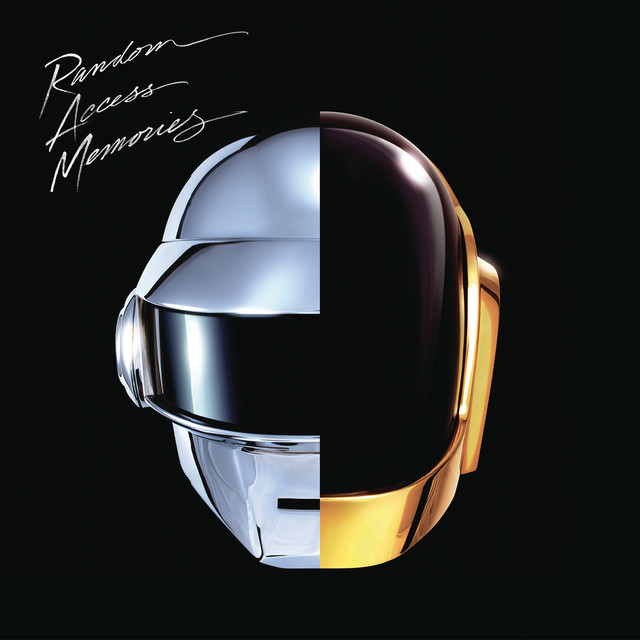
This is the inversion case: the song where Pharrell is not the hidden producer but the visible voice. Most listeners know Pharrell sang on "Get Lucky" (his name is on the credit). What they don't know is that he is also the entire vocal on "Lose Yourself to Dance", the song that effectively bookends Get Lucky on Random Access Memories. And that he co-wrote both with Daft Punk and Nile Rodgers — meaning, structurally, a quarter of the most-decorated electronic album of the 2010s is Pharrell.
The connection had a long lead-in. Pharrell had been a Daft Punk fan since Discovery (2001); Thomas Bangalter and Guy-Manuel de Homem-Christo had been Neptunes fans for almost as long. They met at an art opening in Paris in 2009, talked about doing something together, and finally booked the Random Access Memories session four years later. Pharrell flew to the New York studio, listened to Nile Rodgers's guitar loop, and freestyled the "She's up all night for good fun, I'm up all night to get lucky" melody in something like fifteen minutes.
It is worth pausing on this. The most globally recognised pop hook of the 2010s, won at the 2014 Grammys for Record of the Year — was a freestyle vocal over a Nile Rodgers loop by the same producer who, a decade earlier, had spent an afternoon clicking his tongue into a microphone to make "Drop It Like It's Hot." The career range is genuinely strange.
7. The Kendrick bombshell: "Alright" (2015)
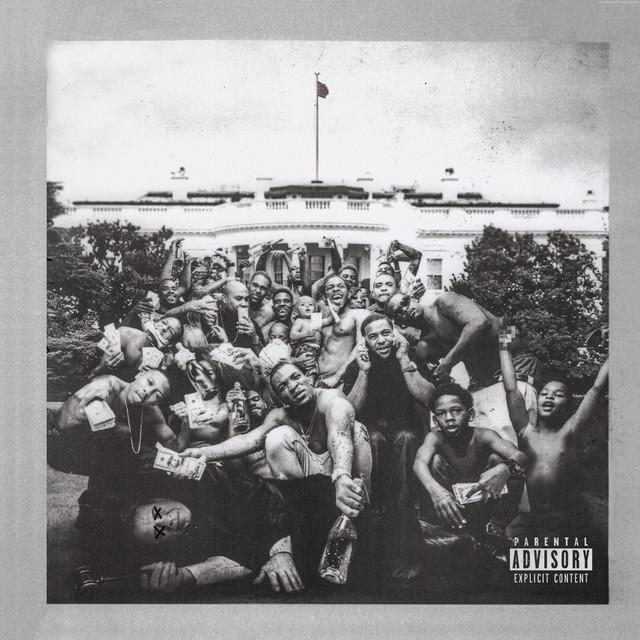
"Alright" — Kendrick Lamar (2015). Co-produced by Pharrell Williams and Mark "Sounwave" Spears. Pharrell sings the hook — "we gon' be alright, we gon' be alright" — that became the chant of the Black Lives Matter movement at protests in Ferguson, Cleveland, Baltimore, Charlotte and a hundred other cities from 2015 onward.
The story of how it ended up on To Pimp a Butterfly is told in a 2022 Revolt / Rap-Up feature: Pharrell originally made the instrumental for another artist who passed on it. A Sony executive flagged it to Sounwave at Top Dawg Entertainment. Sounwave took it to Kendrick. Kendrick wrote the verses around Pharrell's hook melody. The song almost didn't make the album — Kendrick had to be talked into including it.
That song — the most politically consequential rap single of the decade, a Pulitzer-Prize-contributing track on a Pulitzer-winning album, the protest-march anthem — has a Pharrell Williams co-production credit. Most listeners do not know this. Kendrick is treated as the auteur of TPAB and he is, but the hook you sing is Pharrell singing.
It is the same trick as "Get Lucky": Pharrell quietly being the melodic voice of an album by an artist who otherwise dominates the foreground.
8. The Hans Zimmer collaboration: scoring superheroes (2014)
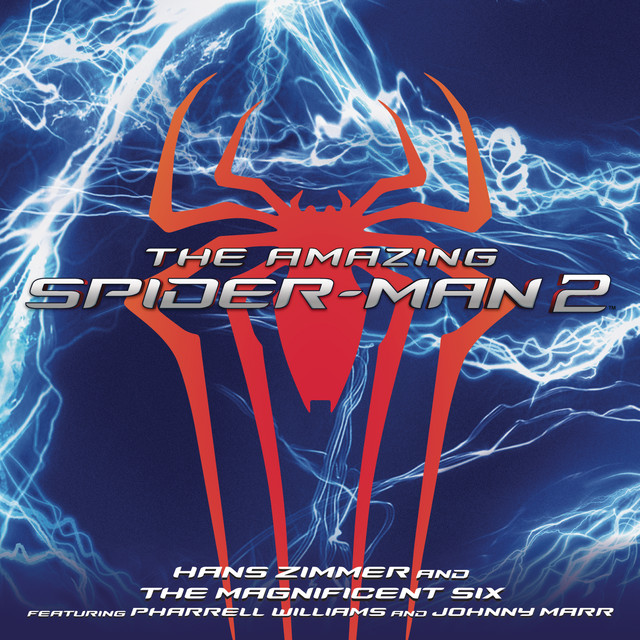
For Marc Webb's The Amazing Spider-Man 2, Hans Zimmer assembled what he called The Magnificent Six: himself, Pharrell Williams, Johnny Marr (former guitarist of The Smiths), Junkie XL, Mike Einziger of Incubus, and Andrew Kawczynski. The brief was a Spider-Man score with rock and electronic energy rather than the conventional symphonic mode.
Listen to "I'm Spider-Man" (2014) from the Amazing Spider-Man 2 score. The orchestral surface is Zimmer. The guitar lead is Marr. The vocal-percussion layer is Pharrell — chanted four-counts, looped breath samples, treated like another instrument in the orchestra. He is doing his pop-production technique inside a Hollywood film score, and the result sounds like nothing else in superhero music. The Electro villain theme on the same score uses the same vocal-percussion language even more aggressively.
You almost never see this credit listed. Pharrell is not in the Spider-Man 2 trailer copy. The score is sold as "Hans Zimmer & The Magnificent Six" with no individual breakouts. But there is roughly an album's worth of Pharrell composition on that film score — symphonic Pharrell, which exists nowhere else in his discography.
9. The Solange one-off: "I Decided" (2008)
"I Decided, Part 1" — Solange (2008). Off Sol-Angel and the Hadley St. Dreams — Solange's Motown-pastiche album, four years before True and seven years before A Seat at the Table. Pharrell co-produced the song with Solange. It is one of the few tracks in his catalogue with no synth at all — perky upright piano, finger-snaps, hand-claps, 1960s vocal harmonies stacked five-deep. It sounds like a Phil Spector record produced by someone who had never met Phil Spector.
This is the un-Pharrell Pharrell: no signature drum sound, no four-count, no synth, no rap feature. Proof that the stylistic range goes wider than the Neptunes-2000s sound that most listeners have catalogued in their heads as "Pharrell." If you played someone "I Decided" blind and asked them to guess the producer, they would not say Pharrell. That is the entire point.
10. The N.E.R.D. detour, and why nobody noticed
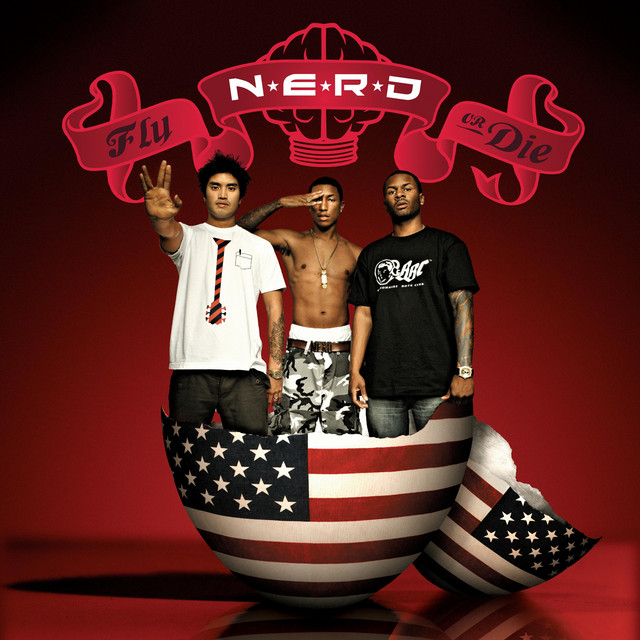
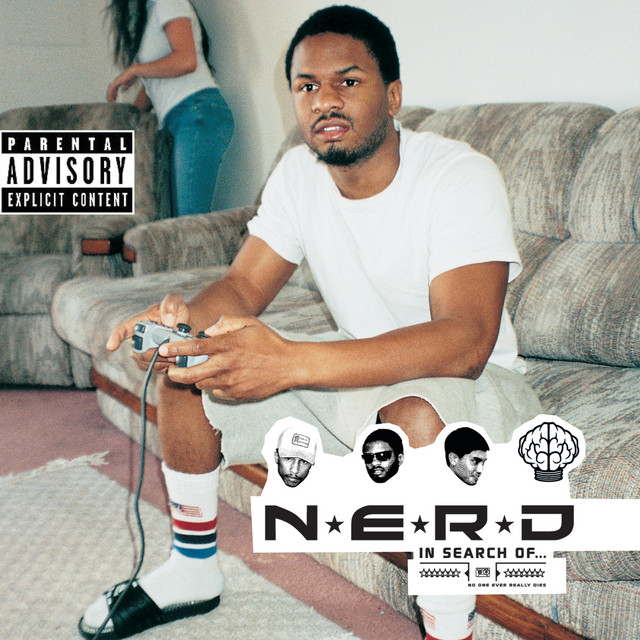
A key reason Pharrell's hidden discography stayed hidden is that he had a visible one running in parallel that drew off all the attention: N.E.R.D. (Pharrell, Chad Hugo, Shay Haley) released four albums between 2001 and 2017, including In Search Of... (2001/2002), Fly or Die (2004), Seeing Sounds (2008), Nothing (2010), and No One Ever Really Dies (2017). Notable tracks:
- "Lapdance" (2001) — politically-charged single ("politicians are pimps") from In Search Of....
- "Rock Star (Poser)" (2002) — the band-rerecorded US version of the song that defined the Fly or Die aesthetic before it existed.
- "She Wants to Move" (2004) — the radio hit that made N.E.R.D. a viable touring band in Europe for the rest of the decade.
- "Truth or Dare" ft. Kelis & Pusha T (2002) — the Neptunes ecosystem in concentrated form, three of their artists on one song.
- "Hot-n-Fun" ft. Nelly Furtado (2010) — late-N.E.R.D. dance-funk, the single that previewed Nothing.
- "Lemon" ft. Rihanna (2017) — the comeback single from No One Ever Really Dies, a decade after N.E.R.D. had stopped charting.
N.E.R.D. functioned as Pharrell's visible musical identity. It is what music journalists wrote about when they wrote about him. The thousand-and-something Neptunes production credits happening in parallel — for everyone else's records — were assumed to be the side project. They were not. The maths runs the other way.
11. Why we don't recognise his fingerprints
There are three structural reasons Pharrell's discography stays invisible relative to its size:
(a) He produces for the artist, not for himself. Most signature-style producers (Timbaland, Mike WiLL Made-It, DJ Mustard, Metro Boomin, Pharrell's contemporary Kanye West) have a recognisable sonic signature that they apply uniformly across artists — you can identify a Timbaland beat from one bar. Pharrell does this sometimes (the Neptunes 2002–2004 sound is recognisable) but he also actively un-signs his work when the artist requires it. Solange's "I Decided" sounds nothing like Britney's "Slave 4 U" sounds nothing like Kendrick's "Alright" sounds nothing like Daft Punk's "Get Lucky" — all by the same person, in the same decade. Because his signature is variable, it does not aggregate in the listener's memory.
(b) Chad Hugo is invisible. Half of the Neptunes is the silent half. Chad Hugo, the Filipino-American multi-instrumentalist who plays keys, sax, and guitar on Neptunes records, does almost no press, no solo work, no public profile. The Neptunes' production discography is co-credited to both, but in the public mind it collapses to "Pharrell." This actually understates Pharrell's hidden discography because some Neptunes work — particularly the most musically complex pieces — is closer to Hugo than to Williams, and yet the style still reads as Pharrell-coded in the audience's mind.
(c) He is too visible as a face to be invisible as a hand. Pharrell became a celebrity face in his own right by 2004 — fashion (Billionaire Boys Club, ICECREAM, Louis Vuitton menswear since 2023), trucker hats, those specific Adidas, the Pharrell-eternal-youth meme. The face presence eats the production presence. People know Pharrell as the man who made "Happy" and wore the giant Vivienne Westwood hat to the Grammys; they don't connect that face to the disembodied four-count opening of "Hot in Herre" twelve years earlier.
The Pharrell-as-hand version has produced more pop than almost any other living single individual. Quincy Jones in his prime, Phil Spector, George Martin, Rick Rubin — those are the only comparable American producers across their full careers, and even they don't reach the quantity of Neptunes-and-Pharrell credits in the 2000–2010 window. We don't put him in that pantheon partly because his face is too friendly, partly because his discography is too stylistically scattered, and partly because by the time he was Pulitzer-adjacent (Kendrick, 2015) he had already been re-cast as the Happy guy.
12. A short list of what to listen for
The 2026 ear-test for hidden-Pharrell. Play these in order:
- "Where's Yours At?" — Pharrell ft. Rohff (2003, TAXI 3 OST) — the French film cameo. (YouTube only.)
- "I Decided, Part 1" — Solange (2008) — the un-Neptunes Pharrell.
- "Alright" — Kendrick Lamar (2015) — the hook is his.
- "Lose Yourself to Dance" — Daft Punk ft. Pharrell (2013) — the other Daft Punk song.
- "I'm Spider-Man" — Hans Zimmer & The Magnificent Six (2014) — symphonic Pharrell.
- "Sing" — Ed Sheeran ft. Pharrell (2014) — Sheeran in Pharrell's headvoice.
- "Hella Good" — No Doubt (2001) — the No Doubt song that pre-figures Gwen's solo career.
- "Lapdance" — N.E.R.D. (2001) — the four-count, before anyone called it that.
The four-count is the simplest test: cue up any of the eight tracks above, listen for the first half-second, count along. If you can count along, it's Pharrell.
Listen to the full hand-curated Neptune Engine playlist on Spotify, generated by Playgen as a 40-track tour through Pharrell's hidden discography — from N.E.R.D.'s 2001 "Lapdance" through deep-cut Pharrell collabs with Madonna, Shakira, Beyoncé, Future, Missy Elliott, Kid Cudi, Frank Ocean, Common, Daft Punk and Kendrick. The producer who never meant to leave his count-in on the tape, and who has been hiding inside almost every major pop record of the last twenty-five years.
Sources
- Wikipedia — Taxi 3 (2003) — https://en.wikipedia.org/wiki/Taxi_3
- Wikipedia — The Neptunes production discography — https://en.wikipedia.org/wiki/The_Neptunes_production_discography
- Wikipedia — Alright (Kendrick Lamar song) — https://en.wikipedia.org/wiki/Alright_(Kendrick_Lamar_song)
- Wikipedia — To Pimp a Butterfly — https://en.wikipedia.org/wiki/To_Pimp_a_Butterfly
- Wikipedia — Sing (Ed Sheeran song) — https://en.wikipedia.org/wiki/Sing_(Ed_Sheeran_song)
- Wikipedia — Frontin' — https://en.wikipedia.org/wiki/Frontin'
- Wikipedia — Hollaback Girl — https://en.wikipedia.org/wiki/Hollaback_Girl
- Wikipedia — N.E.R.D. — https://en.wikipedia.org/wiki/N.E.R.D.
- Okayplayer — "'I Never Meant To': Pharrell Says His Trademark Four-Count Production Start Was Not Intentional" — https://www.okayplayer.com/news/what-is-pharrell-four-count-producer-signature.html
- Songfacts — Hollaback Girl by Gwen Stefani — https://www.songfacts.com/facts/gwen-stefani/hollaback-girl
- Rap-Up — "Kendrick Lamar's 'Alright' Almost Didn't Make 'To Pimp a Butterfly'" — https://www.rap-up.com/article/2022/03/09/kendrick-lamar-alright-almost-didnt-make-to-pimp-a-butterfly
- Time — "10 Pharrell-Produced Songs That Sound Nothing Like Pharrell" — https://time.com/3645214/pharrell-songs/
- TheNeptunes.org (fan-maintained discography) — https://theneptunes.org/the-neptunes-discography/
- SiriusXM — "7 Songs You Didn't Know Pharrell Produced" — https://www.siriusxm.com/blog/songs-pharrell-produced
- Loop Kitchen — "The Neptunes' Blueprint: How Pharrell & Chad Shaped '00s Music" — https://loopkitchen.co.uk/blogs/loop-kitchen-blog/the-neptunes-blueprint-how-pharrell-chad-shaped-00s-music